• About

Holland Stephens Interiors

~ all things design: interiors + architecture + entertaining + art …..

Holland Stephens Interiors

Category Archives: Products

Indigo

01 Wednesday Jan 2025

Posted by Holland Stephens in Interiors, Products, Uncategorized

≈ 1 Comment

Tags

Britt Browne, earthues.com, growing indigo, history-of-indigo, indigo, indigo dye, Michele Wipplinger, natural-dyeing, nature, plants
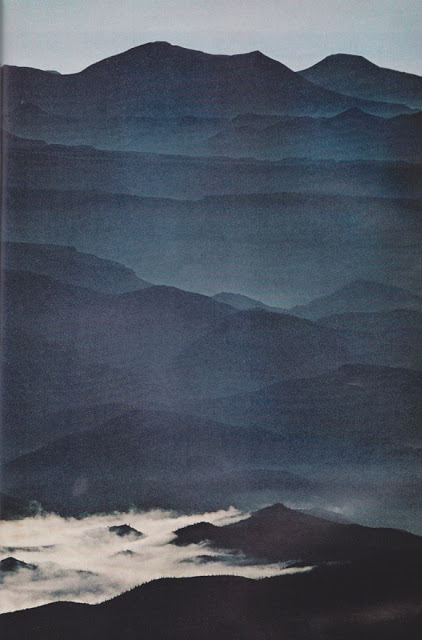
Sierra de San Borja, National Geographic, October 1972

A few years ago I was working on our latest fixer-upper project which was a small waterfront cabin only a short ferry ride away from Seattle. Transforming a dilapidated waterfront cabin on Vashon Island was no small feat, but the allure of its breathtaking view made it an irresistible challenge. Acquired in foreclosure, the neglected property had become a haven for moisture and local critters. The rehabilitation process demanded an exhaustive overhaul—drywall, floors, doors, windows—every surface had to go. Wiring and plumbing needed to be redone, alongside a laundry list of other repairs. Yet, amidst the laborious restoration, there came a moment of inspiration. As the upstairs took shape, I gazed out at the brooding Seattle sky and the deep indigo waters, and it hit me—this home would reflect the natural beauty outside. Thus, the serene shades of indigo began to weave their way into the interior design, capturing the essence of the Pacific Northwest within.
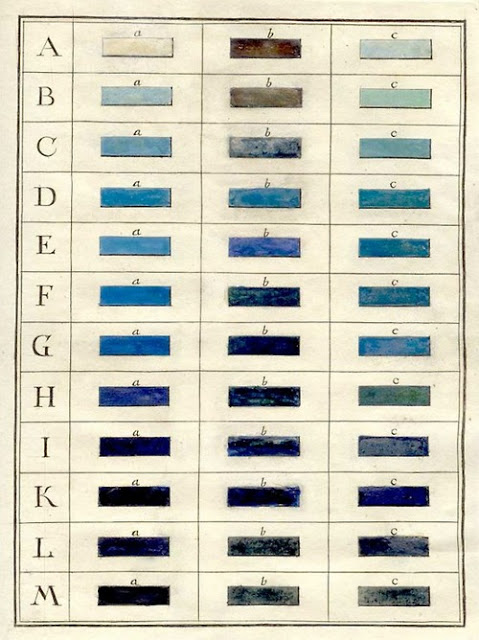
Shades of blue Britt brown

Delving into the origins of indigo revealed a captivating tale. This ancient dye boasts a storied history, and its transformation process is nothing short of fascinating. Unlike most dyes, indigo begins as a vibrant blue, morphs into yellow, then green, before finally oxidizing on the fabric to achieve the iconic deep blue we know and love. For the aficionados, the scientific name of the indigo plant is Indigofera tinctoria—a true gem in the world of natural dyes.
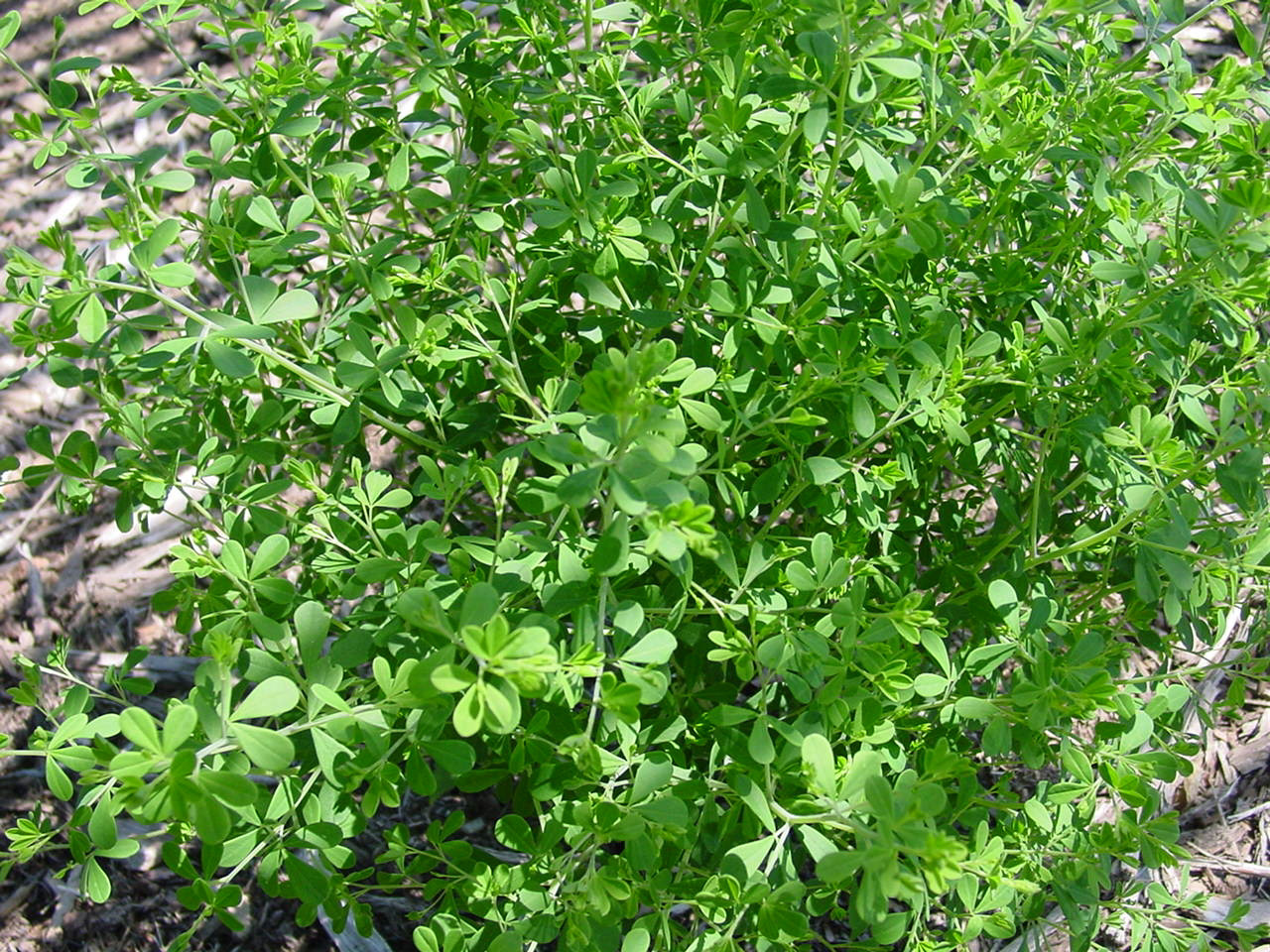
wild indigo plant

The benefits of cultivating indigo extend beyond its captivating hues; it’s good for both soil and farmer alike. Versatile enough to be grown alongside staples like wheat and corn, indigo’s nitrogen-rich properties rejuvenate the soil, enhancing the yield of food crops. With over 275 plant varieties capable of producing indigo, this dye has naturalized across diverse climates worldwide. No matter the plant, the ancient method of converting leaves into dye remains unchanged. By composting the leaves in alkaline water, the indigo pigment is coaxed out over 12-18 hours, turning the water a deep blue. This blue liquid is then aerated through vigorous beating, causing the dye to settle. The water is drained, leaving behind a bright blue sludge, which is dried and sold in chunks, preserving this age-old craft.
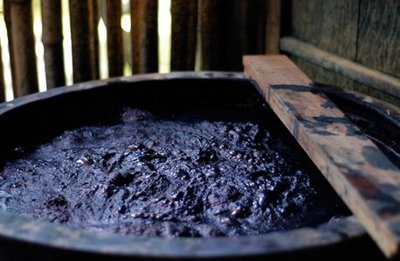
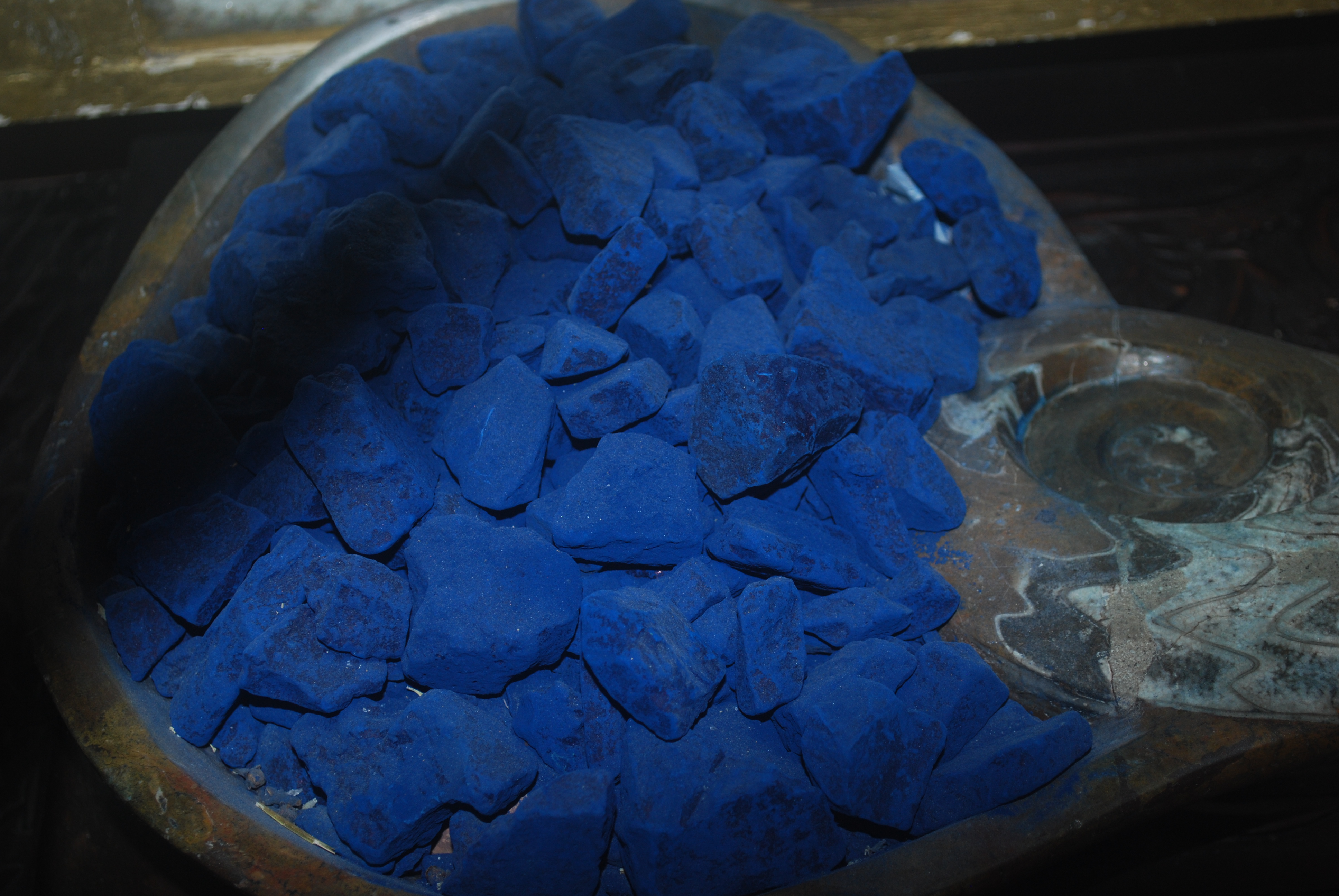
Indigo vat

Indigo

Crafting your own indigo dye is not easy, but thankfully, pioneers like Michele Wipplinger have paved the way. As the visionary founder of Seattle-based Earthues, Michele dedicated her life to demystifying the art of natural dyeing. Though she passed away in 2020, her legacy lives on through her husband Andro and their youngest son Misha, who continue to helm the company. Their spectrum of sophisticated colors is nothing short of extraordinary. You can find Indigo dyeing kits along with many other beautiful natural dyes on their website. https://earthues.com/collections/natural-dyes

Indigo is often synonymous with deep blue, but it also has a captivating array of hues, including the delicate blue-greens seen in this antique dress from Uzbekistan.  
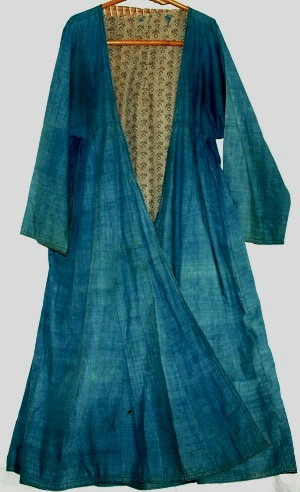
indigo antique dress from Uzbekistan

The depth in color is dependent on the concentration of dye in the bath, and how many dips are made into the dye bath with oxidation occurring between each dip. Starting as a light green it then deepens into the deep azure blue that we typically think of as indigo.
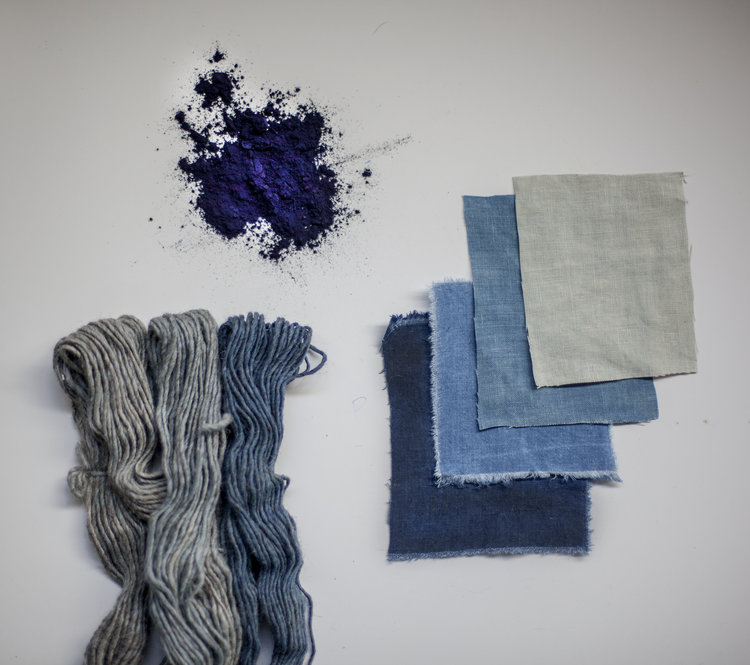
The journey of breathing new life into the once-abandoned cabin wasn’t just a feat of construction; it became an odyssey of discovery. My deep dive into the history and science of indigo dye unraveled layers of knowledge I had never anticipated. From the vibrant blues to the subtle blue-greens, the myriad shades of indigo found their way into the heart of our home.

Every room now tells a story of the natural beauty that surrounds us—the walls echo the hues of the Seattle sky, the textiles mirror the serene waters, and even the smallest details carry the essence of indigo’s rich history. This transformation not only revived the cabin but also infused it with a unique charm that celebrates both the past and the present. Indigo, in all its glory, has become the thread that weaves our remodeled cabin into a harmonious tapestry of nature and design.
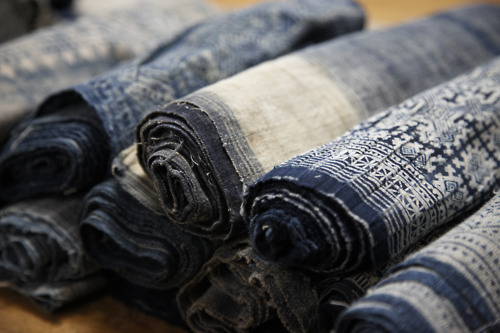
indigo textiles

Images courtesy growingindigo.blogspot.com, national geographic, kahina-givingbeauty.com, naturalmedicinesofnc.com, greenmattersnaturaldyecompany.com
 

Homes of creatives

01 Tuesday Oct 2024

Posted by Holland Stephens in Architecture, Interiors, Products

≈ Leave a comment

Tags

Allison Shearmur, Design, Ditte Isager, Doug Lloyd, Francisco Costa, Highland Lodge, home, Home of John Derian, home-decor, homes of creative people, Homes of creatives, interior-design, interiors, Interiors by Martyn Thompson, James Gager, John Derian, Kim Ficaro, Kirsten Willey, Lesley Crawford, Liddie Holt Harrison, Martyn Thompson, Nests of creatives, Nickey Kehoe, Richard Ferretti, Suzy Hoodless, Todd Nickey, Vincent Van Duysen

nests-of-creatives John Derian

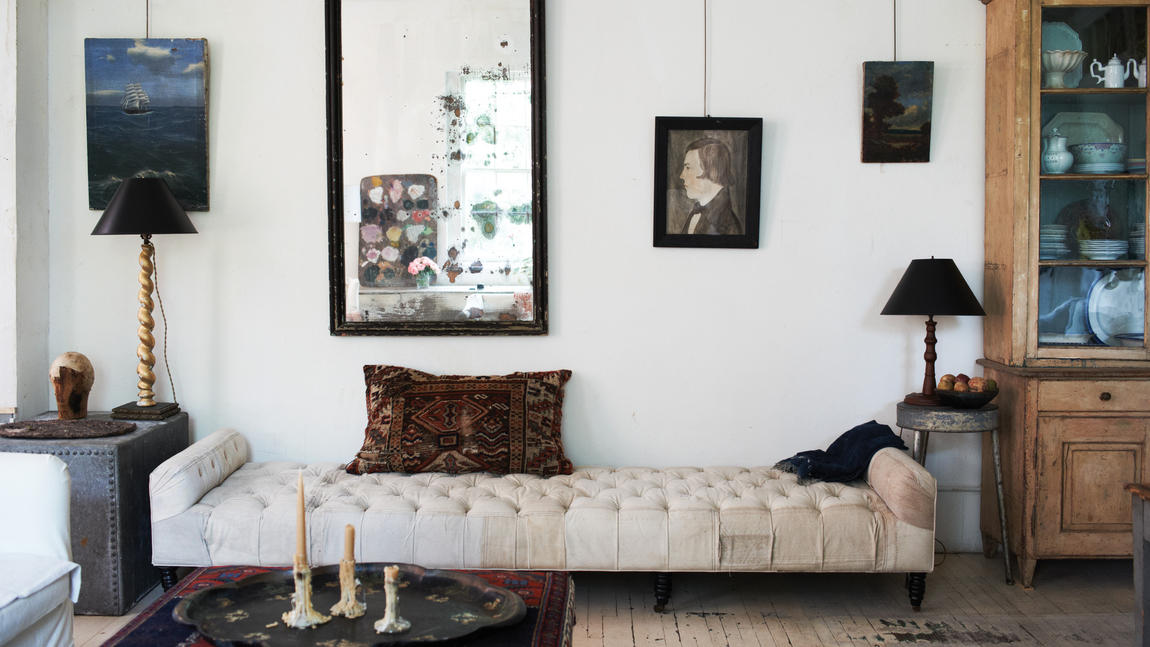
Recently I was thinking about the homes of creatives and how their homes are a true reflection of who they are and the work they do. Some of the more inspiring homes I see in magazines are homes of creative individuals. They have a certain something. An unadulterated vision. Not always perfect but so appealing in their quirkiness. (Above we see the home of John Derian.)

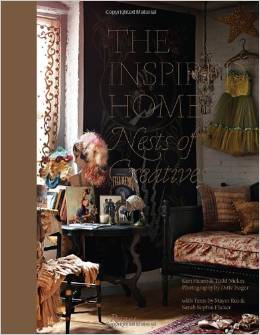
After doing a bit of research I found that Rizzoli published  The Inspired Home: Nests of Creatives by Kim Ficaro and Todd Nickey It’s a fresh eye comparing a variety of approaches to living, rather than the depiction of a particular style. The book presents 17 houses belonging to creative people whose quarters reflect their personal and rather inspired approaches to living.

Unknown

Kim Ficaro is a prop and interiors stylist, and Todd Nickey, is an interior designer and co-owner of Nickey Kehoe, a very cool design shop in Los Angeles and New York City.  For this book, they stepped back and used their vision to record the work of others. They used the very talented Ditte Isager to do the photography. Her home is also included in the book.

They discovered a great selection of creative types, from designers and tastemakers to writers and musicians. The homeowners passions, aesthetics, and sensibilities are reflected in their surroundings for us to observe and sometimes take note for their rejection of the norms in “designed” spaces. Some good old fashioned rule breaking never hurt anyone I say. Some great examples below for inspiration.

inspired-home-155-ms111099_sq

Hand-painted wallpaper brightens mornings in Allison Shearmur’s Los Angeles home.

Screen Shot 2014-09-03 at 12.36.30 PM

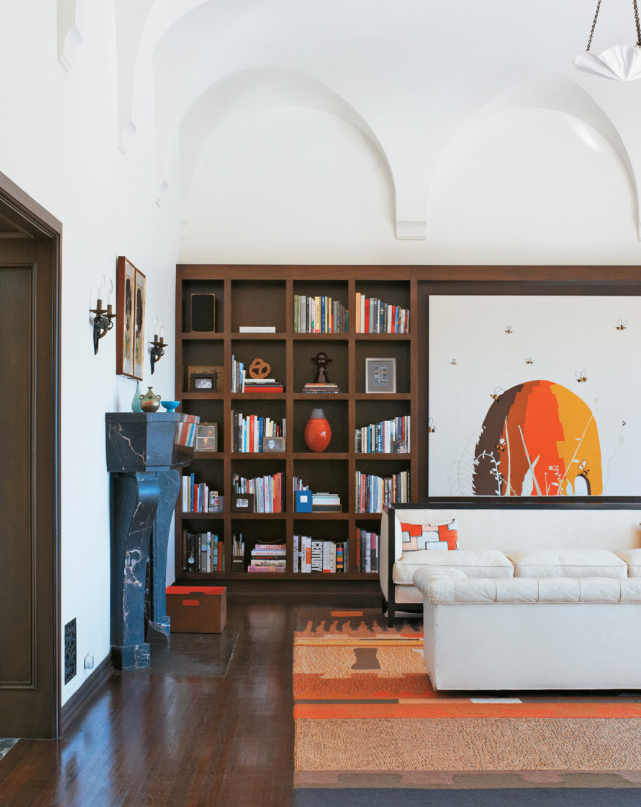
The living room of Shearmur’s home is stately and minimal. The bookshelves contain an amazing array of art books as well as smaller collected pieces.

inspired-home-Ferreti

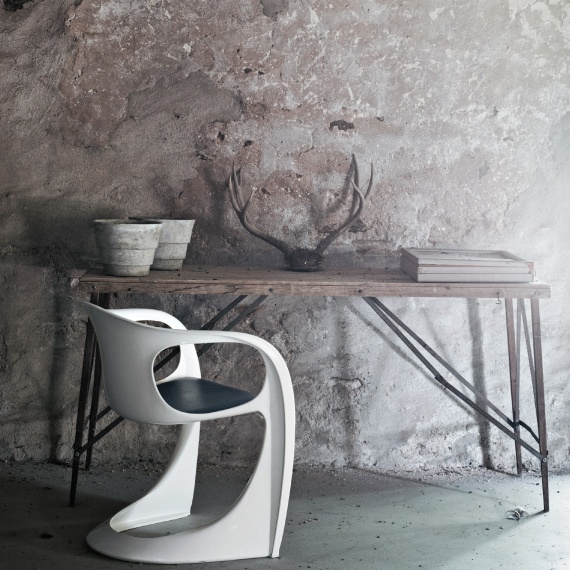
A modern chair sits beside an old wallpapering table in the white-and-gray New Hope, Pennsylvania, home of Richard Ferretti and James Gager.

InspiredHome_p021

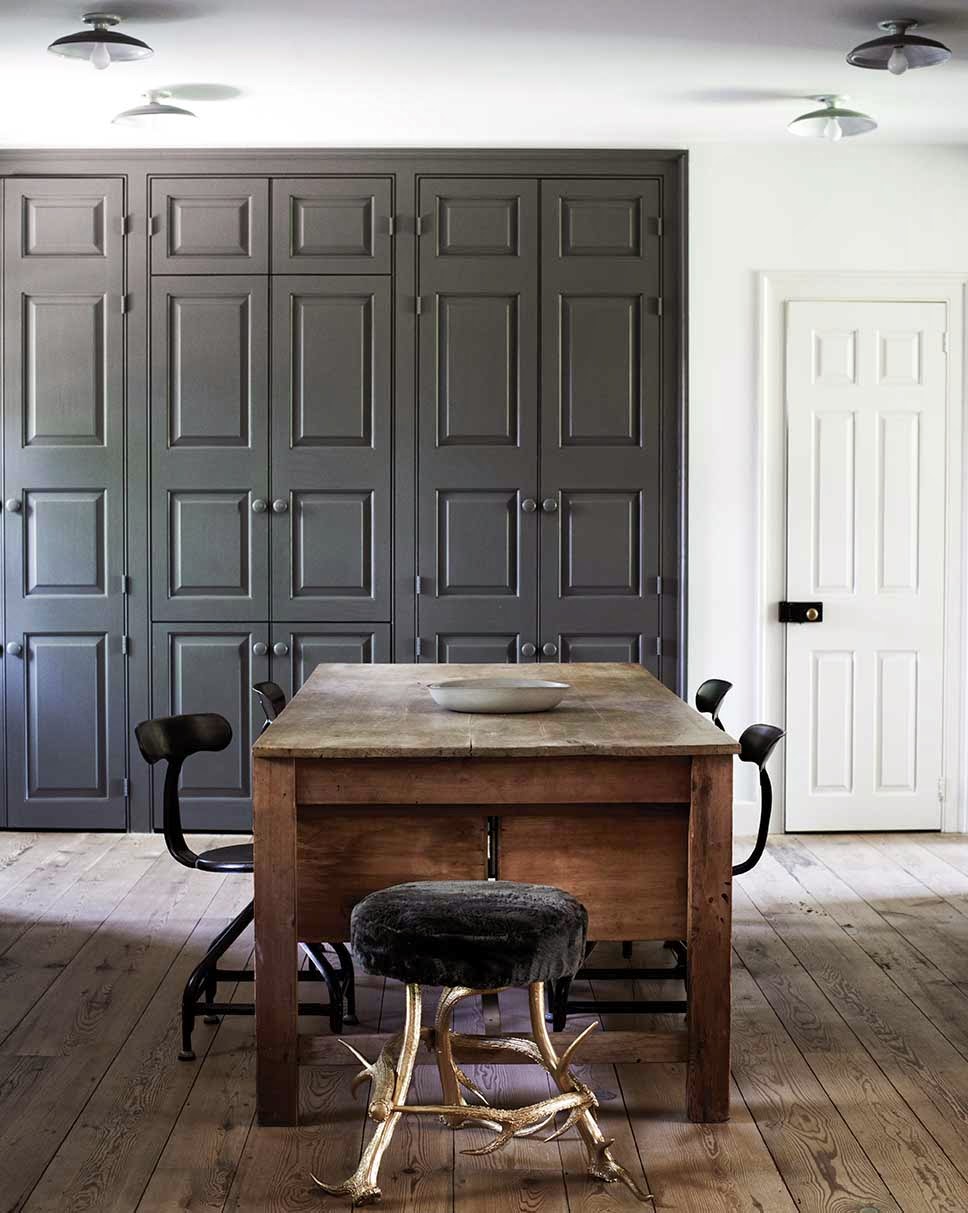
An artful, orderly array of cabinets adjacent to the kitchen in the Ferretti/Gager home. 

inspired-home-167-ms111099_sq

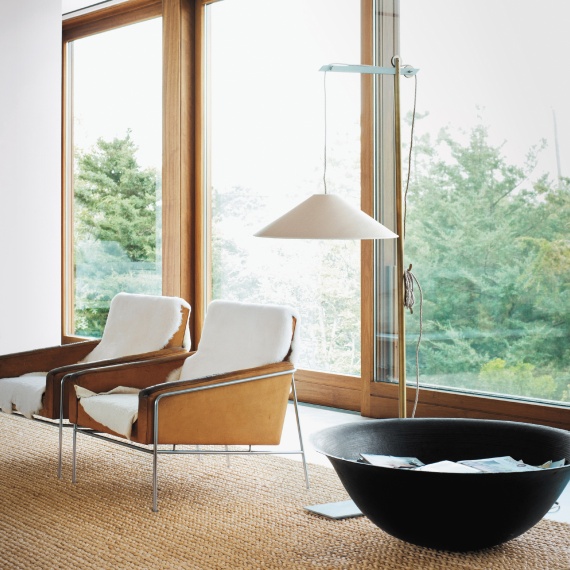
In Doug Lloyd’s Hamptons retreat, floor-to-ceiling sliding doors blur the boundaries between indoors and out.

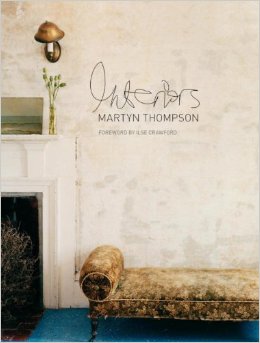
Another great book I found was Interiors by Martyn Thompson.

51JtayskCOL._SX258_BO1,204,203,200_

Martyn is an expat from Australia currently residing in NYC who began his photographic career over 30 years ago starting with shooting his own fashion line. However, his images grabbed more attention than his clothing line and thus he began working for the likes of Architectural Digest, W, Vogue, as well as capturing imagery for Tiffanys, Ralph Lauren, Hermes, and Gucci.

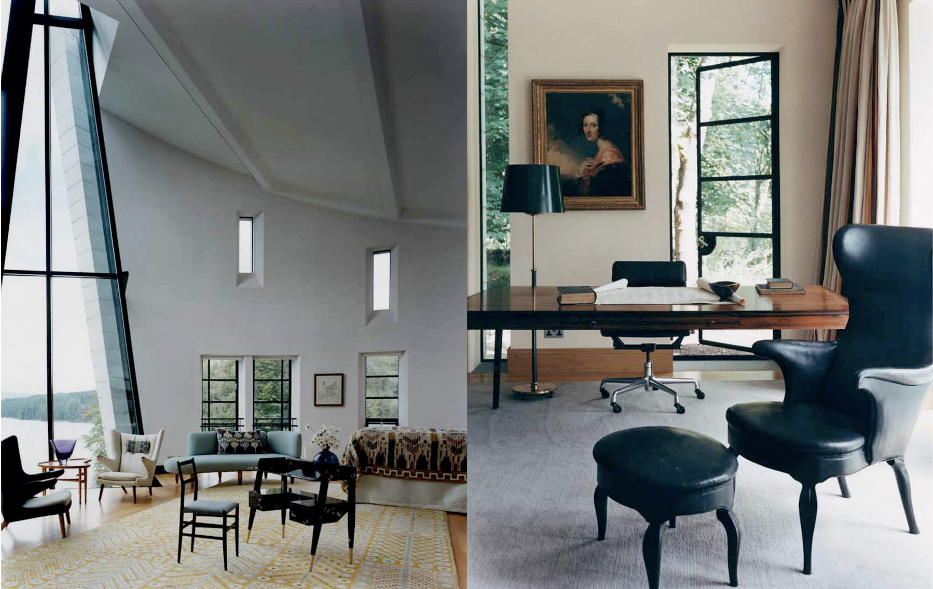
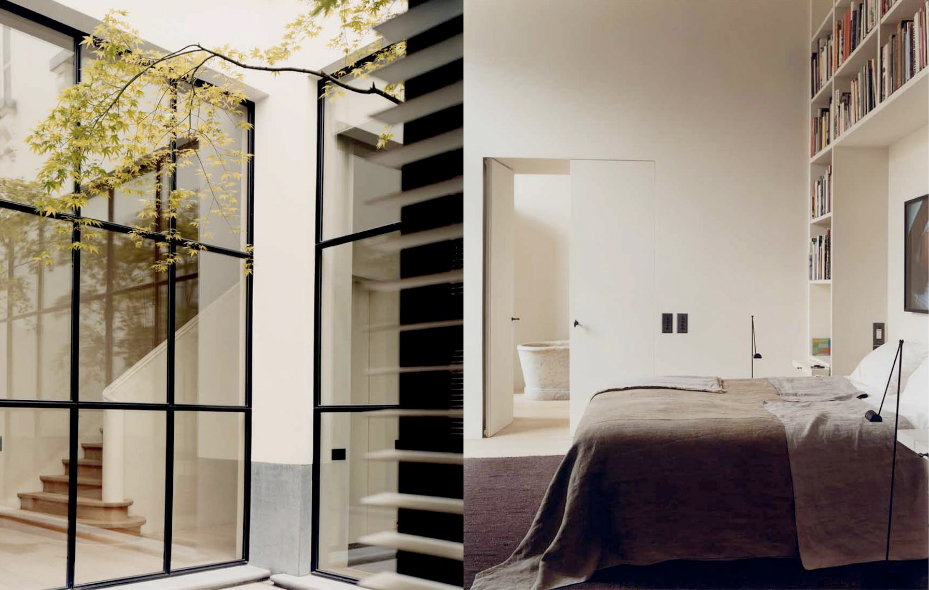
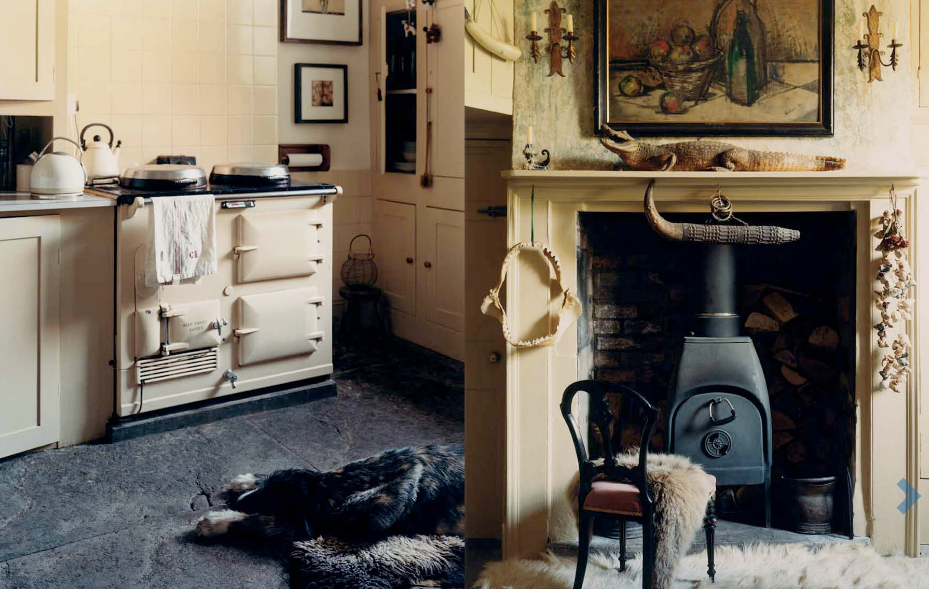
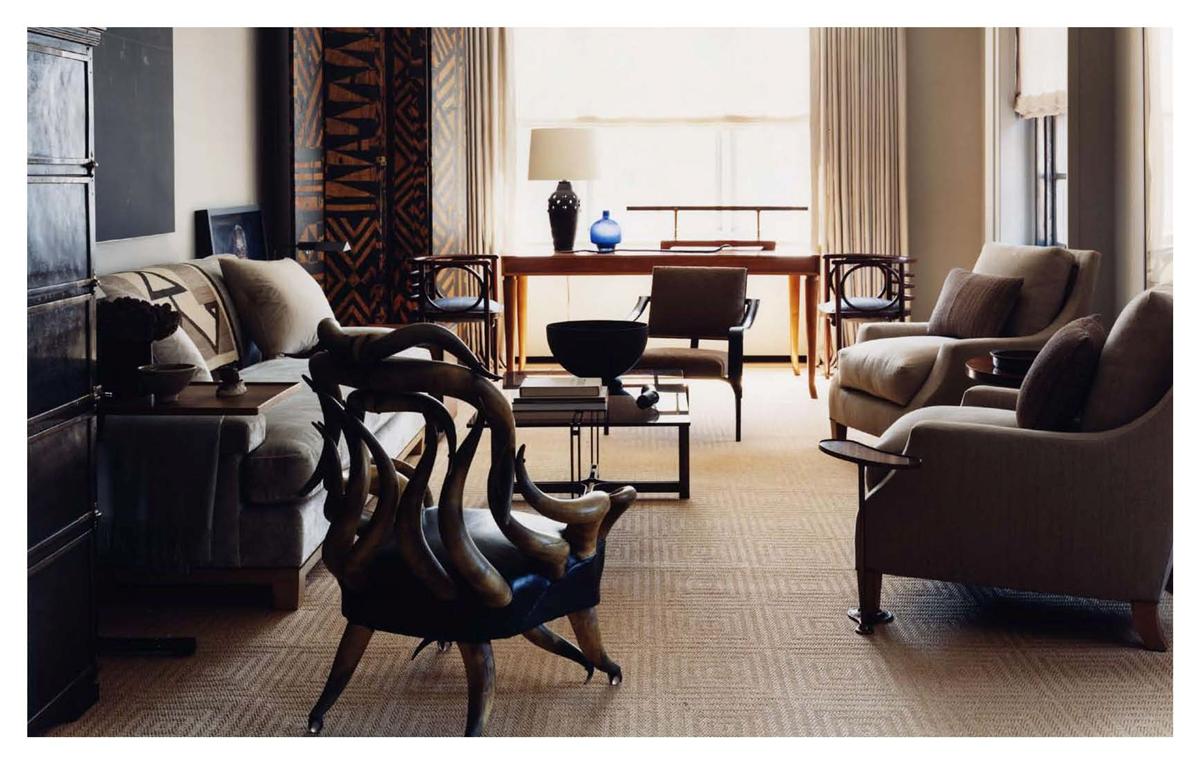
A book was born when many people had suggested that he publish a book of the interiors work he had shot for creatives the world over, then, talking one day with the co-author, Kirsten Willey, she offered to put it all together and so the book was set in motion. Here are some more great, unusual interiors.

afde63f6918965f1075d050cb89289a3

Highland Lodge in Scotland by Designer, Suzy Hoodless

fc0757b815fec443f92494a9e3755fb4

Vincent Van Duysen, architect, Belgium

92964374ef960aba49b7a57015eb0f22

Liddie Holt Harrison, Model, England

9781742702346-3

Francisco Costa, fashion designer, New York

9781742702346-2

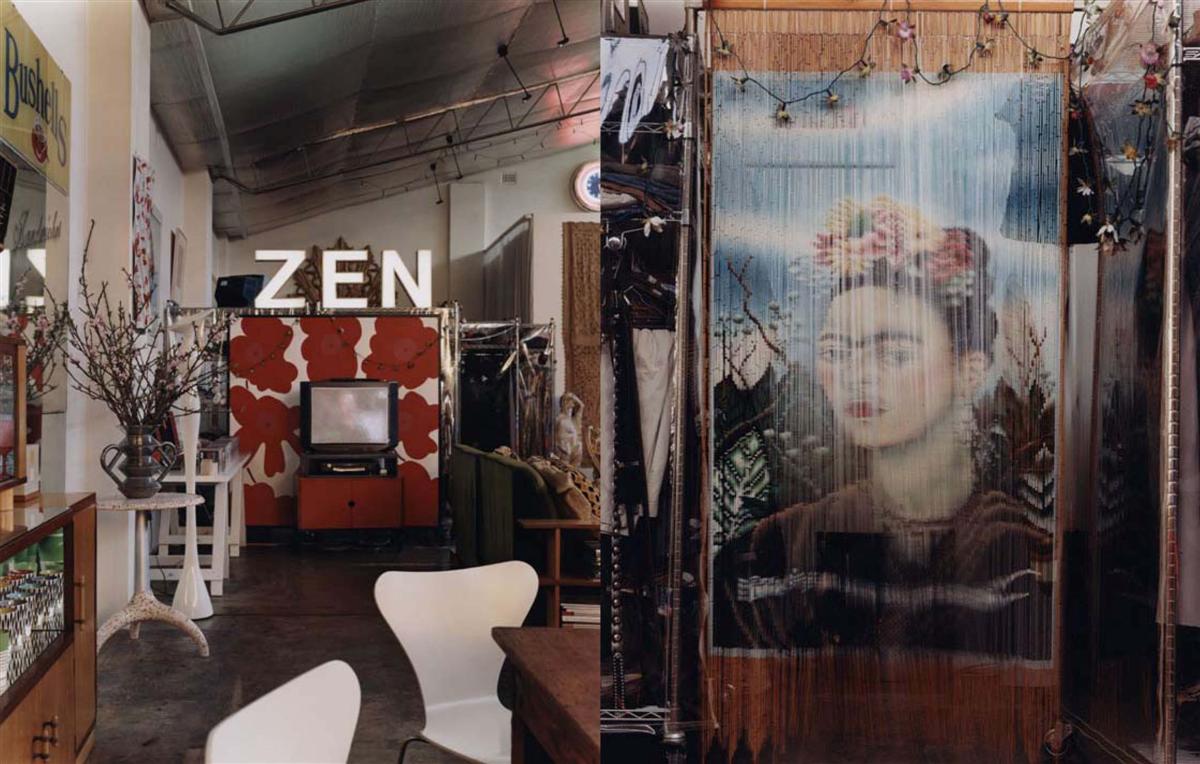
Lesley Crawford, film and set designer, Sydney

So many great interiors. I showcased only a select few from these two books but hopefully it gave you a taste of what was to be found inside: deeply personal and memorable interiors. I’d recommend purchasing one or both of these books for when you need a bit of design inspiration that falls outside of the status quo.

Images courtesy of : Nests by Ditte Isager,  Interiors by Martyn Thompson.

If you would like your home to be warm, inviting, stylish, and reflect your personal style contact us here to discuss our design services.


Time to cozy up

01 Sunday Sep 2024

Posted by Holland Stephens in Interiors, Products

≈ Leave a comment

Tags

angora goats, history of mohair, Mohair, mohair fabric, mohair manufacturers, mohair wool, opuzen, production of mohair, rogers and goffigan, san carlo mohair, schumacher, upholstery fabric

laine-mohair creature

Ok, maybe not this cozy. (Sorry couldn’t help myself when I found this image.) But it is beginning to feel a bit chillier around here. I just saw my neighbors oak tree begin to flash its first leaves of red and orange, a sure sign that fall is just around the corner.

I am also beginning to see all of the big box stores putting out their fall colored accessories and Halloween decorations. Already? it seemed like summer would go on forever in Seattle this year. Amazing, endless days of sunshine and we Seattleites soaked up every gorgeous ray we could get.

However sweater weather is upon us and honestly fall is my favorite season. So many gorgeous colors, and the fall morning mist is something I look forward to every year.

Screen Shot 2014-09-02 at 5.59.17 PM

mohair sweater 2

With the fall upon us I thought I would put out a post on Mohair since it is one of the coziest fabrics I can think of and is definitely a favorite of mine whether being used in a really great sweater,

or on a sofa.

sofa

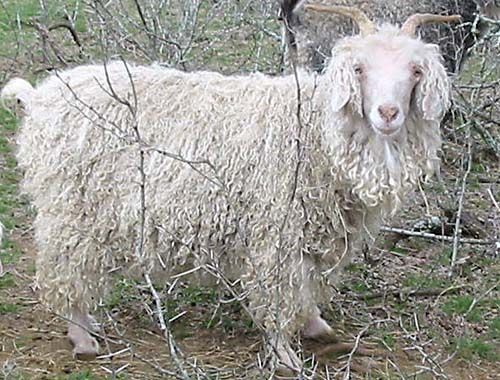
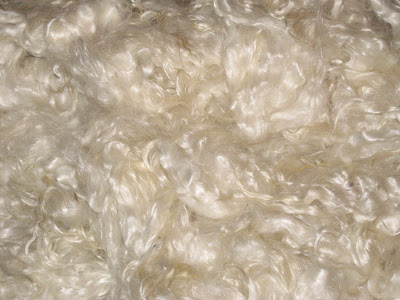
Mohair comes from the wool of Angora goats.

white_mohair_goat_nanny

Both durable and resilient, mohair is notable for its high luster and sheen, which has helped give it the nickname the “Diamond Fiber”, and can be used in fiber blends to add these qualities to a textile. I have samples on my desk right now and most of them show this fabric to withstand 40-100 thousand double rubs, tough stuff. (Double rubs are a fabric test that determines how long a fabric can stand being abraded before it falls apart)

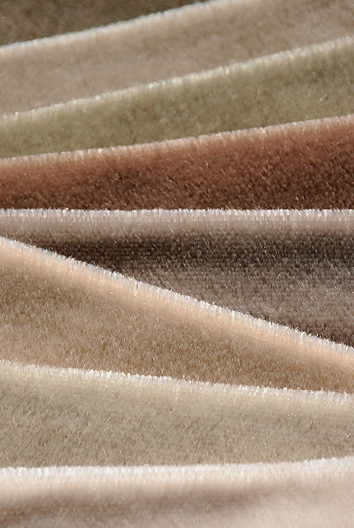
Mohair takes dye exceptionally well which is one of the reasons I love it so much. The colors you can get in Mohair are like no other fabric.

Mohair is warm in winter as it has great insulating properties, while remaining cool in summer due to its moisture wicking properties. It is naturally elastic, flame resistant, crease resistant, and does not felt. It is considered to be a luxury fiber, like cashmere, angora and silk, and is usually more expensive than most wool that comes from sheep but it will last nearly forever if treated properly.

IMG_1870

Mohair is shorn from the goat without harming the animal. Shearing is done twice a year, in the spring and in the fall. One goat will produce 11 to 17 pounds (5–8 kg) of mohair a year.  South Africa is the largest mohair producer in the world, with the majority of South African mohair being produced in the Eastern Cape. The United States is the second-largest producer, with the majority of American mohair being produced in Texas.

Landscape

Mohair is also one of the oldest textile fibers in use. The Angora goat is thought to originate from the mountains of Tibet, reaching Turkey in the 16th century. However, fabric made of mohair was known in England as early as the 8th century. To get really technical on you….. The word “mohair” was adopted into English sometime before 1570 from the Arabic: مخير mukhayyar. (thanks Wikipedia)

318

Opuzen as seen above makes some really lovely mohairs.

32f5986

I also really love the colors that Rogers and Goffigan offer in their mohairs seen above.

Screen Shot 2014-09-02 at 6.54.26 PM

Schumacher has a line called San Carlo that I also really like.

All gorgeous stuff really. Can’t wait to specify some on my next project because of its beauty and durability. Hopefully we might have a yard or so left over that my client will pass on to me to use on some cozy pillows for those chilly fall days ahead.

Images courtesy of http://lolannonces.fr/blog/2012/11/03/les-plus-beaux-bibendums-en-mohair/laine-mohair/, http://digital-art-gallery.com/photo/914, http://www.countingstonesheep.tumblr.com/post/17756302865, http://www.//be0k.tumblr.com/post/80549909704, http://www.nikisawyer.com/sheep/sheep_image_3741.htm, http://www.//kansasfiberfarm.blogspot.com/p/mohair-for-sale.html, commons.wikimedia.org/wiki/File:ANGORA_GOATS_GRAZE_ON_A_FARM, http://www.opuzen.com, http://www.rogersand goffigon.com, http://www.fschumacher.com

If you would like your home to be warm, inviting, stylish, and reflect your personal style contact us here to discuss our design services.

Time

01 Saturday Jun 2024

Posted by Holland Stephens in Interiors, Products

≈ Leave a comment

Tags

hourglass, ikepod, marc newson, mathew frederick, time

Ikepod-Hourglass-6

Time…..with the long days of summer now here it feels like we have more time. The sun is up and streaming through windows, waking us up earlier and earlier. The evenings are prolonged and we can find ourselves still in the last hours of daylight at nine thirty. In short, I love it. I feel like getting all of those projects that are on my long list done. I don’t have to squeeze them into the short hours of a winter day. I can be out in the garden at 8:30 p.m., still clipping and digging or going for a walk around the neighborhood and chatting with neighbors on their front porches. An interesting by product of these slow moments is that I feel more compelled to create. Slow time can be a very good thing for refilling our creative wells. A moment to think and not necessarily DO. Simply enjoying the moment without rushing.

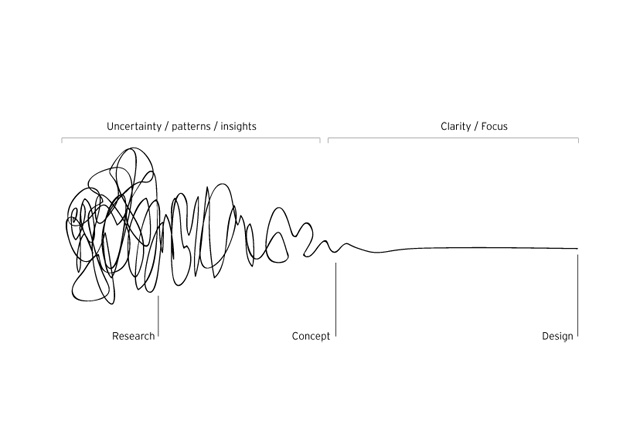
I’ve found that rushing has never helped a design project. The luxury of having more time is something that isn’t lost on me. Sometimes I wish solutions came in a straight line. But this is rarely the case. Usually it is a circuitous and tangled line. That looks something like this.

process of design

This desire for a solution to come in a straight line is usually driven by a perceived lack of time, real or imagined. However all of those paths that we take on our circuitous route are useful. They can lead us to other opportunities and other moments of learning that we can use later. Let’s take this journal entry for example. I was first reading a book about the history of knot tying. I was thinking about how long it must take to perfect this art and how many mistakes you had to make to get to a perfectly constructed ocean plait knot. It is a slow process of learning. Trial and error. This then reminded me of a great book I have called 101 Things I Learned in Architecture School by Mathew Frederick. Looking through it I found on page 81 the quote I was looking for. “Engage the design process with patience. Don’t imitate popular portrayals of the creative process as depending on a singular, pell-mell rush of inspiration. Don’t try to solve a complex building in one sitting or one week. Accept uncertainty. Recognize as normal the feeling of lostness that attends to much of the process. Don’t seek to relieve your anxiety by marrying yourself prematurely to a design solution; design divorces are never pretty.”  Words to live by. I then started to think about how to time oneself in such a manner that would simultaneously keep you on track and yet move at a pace that encouraged you to ponder. I thought about an hourglass and then started to look for images of one. On Google I found a reference to Marc Newson and his work with Ikepod which is a timepiece company. He has created a line of very high end hourglasses that are amazing.

hourglass 3

These are the type of products that are not created “pell-mell” but thoughtfully developed and created. You can see the video by clicking the link below.

IMG_4112

http://www.nowness.com/day/2011/4/14/1410/marc-newson-for-ikepod

After watching this I realized that I had a journal entry. I didn’t sit down and decide that I needed to write about time. I was wandering down a path, taking time out of a weekend day and had encountered a series of experiences that I realized were connected. I wasn’t married to any particular outcome.

Sometimes being creative means not knowing where you are going down the path but taking the TIME and wandering just the same. Looking for and finding the connections along the way.

Images courtesy of legitlifestyle.com, marc-newson.com, the jewelryeditor.com
Warp and Weft

01 Friday Mar 2024

Posted by Holland Stephens in Interiors, Products

≈ 1 Comment

Tags

Bergamot studio, bias, Designer fabric line, Designing your own fabrics, Fabric design, fabric line, Kassana Holden, Lauren Liess fabrics, Lauren Liess interior design, Selvedge, Textile design, Victoria Larson, Warp and weft, Yacht interior design

Silk damask embroidered

I frequently find myself surrounded by piles of beautiful fabrics. Mind you they are usually just small 6″ x 6″ square samples of a fabric but nonetheless, they are one of the biggest pieces of the design puzzle. Finding just the right fabric can sometimes bring an entire room together. I remember when I was in school we spent hours studying line, form, building code, auto cad, etc. but fabric was but a small portion of the program that I was in. It was usually only at the very end of a semester that we would quickly pull a few fabrics together to present along with the rest of the architecture that we had been slaving over.
But I have always had a particular weakness for fabrics, see my earlier post on Linen.  I had learned quite a bit about linen and about textiles in general from one of my first jobs out of college. I was working for a woman who had just started her company importing Italian and Portuguese textiles. She was a great designer and looking back now I realize how much that experience was a seed for the career I have now.

It wasn’t until I worked for a local high end residential firm here in Seattle that I discovered “fabric”. I had the unique opportunity to be assigned to specifying an entire ship. It was being re-done with nearly all of the fabrics being replaced. It was basically like doing a hotel, except every room was different. Each room had to be luxurious, comfortable, and able to withstand multiple guests and deal with extra harsh conditions at sea such as salt water air, and bright sun.  The image below isn’t the boat I worked on but was similar in style. Our client was very private so no pictures were allowed.

Quasar-88-Mega-Yacht-a-Luxury-Palace-on-Water-5-485x291
hemisphere-yacht-deck

I started from the top deck and worked my way down to the underwater lounge. There were fabrics for pillows, sofas, chairs, window coverings, bedding, ceiling panels and built ins. There were also some new furniture pieces to be specified but the majority of my work was to come up with the fabric themes for each of the rooms. I would work through a floor and then present to my boss for review. Sometimes I was on the money, sometimes I had to replace a fabric or two. Sometimes I had to go back and re-work it all. (Wait a second, no one told me he hated green.) But frustration aside, it was a great experience and I really honed my eye.

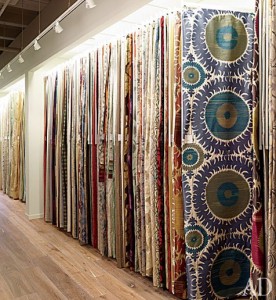
donghia-showroom-01-fabric-276x300

Now that I have my own firm, I still find myself going through wing after wing at the design center, except now its my design, for my client that I’m trying to find that really special fabric for. I can have a very specific idea in my head about what I am looking for and sometimes I can’t seem to find it. This frustration led me to wondering about designing my own fabric line.

There are some other women in the industry that by watching their progress have shown me what a small fabric line can look like. People like Lauren Liess out of Virginia.

0314Lauren-Liess-5165

Victoria Larson in Annapolis

Victoria Larson

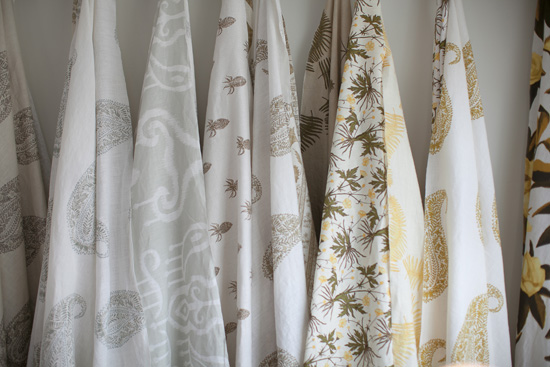
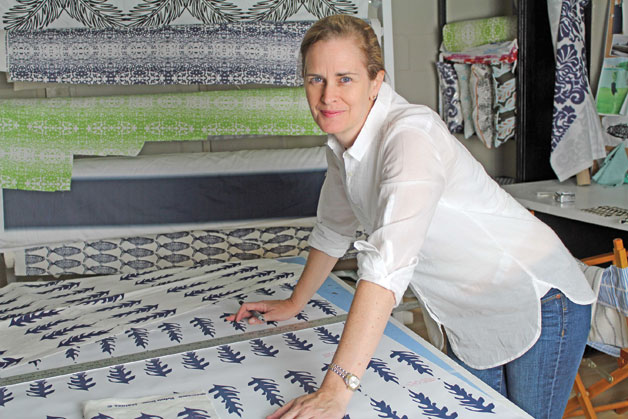
Locally we have Kassana Holden, from Vashon Island who not only does the designs for her fabrics she also prints them right there in her studio using her wide format Epson printer.

Screen Shot 2014-03-28 at 12.12.57 AM

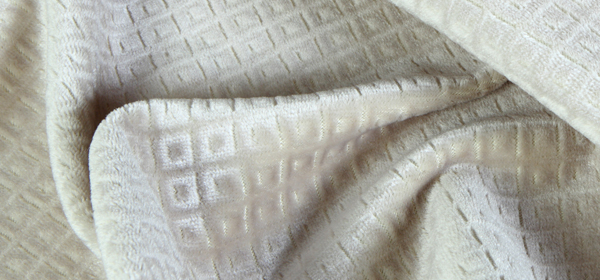
Watching their progress has started me on a journey. Not exactly sure where I will end up with this but I’ve got a big stack of books on textile design, and I’ve been combing the internet looking for ways to get my designs printed on the types of fabrics I love.  I’ve already found out so much. Everything from resist-dyed silk satin damask (rinzu), embroidered with silk and metallic thread as you see in the image I posted at the very top.

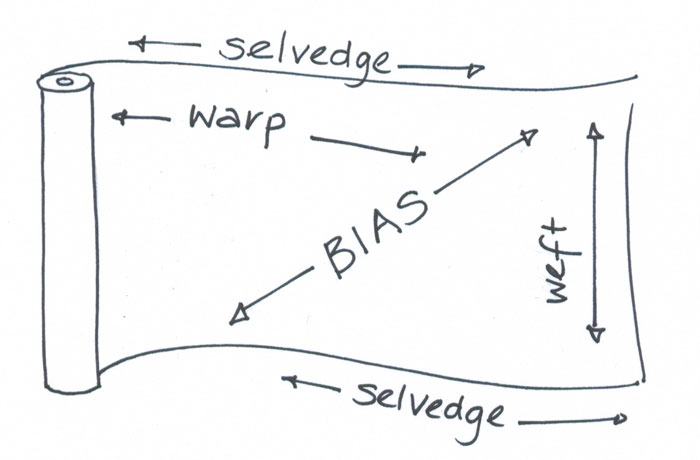
warp weft image

To the basics of fabric design like what warp, weft, selvedge, and bias mean. I’ll keep you posted as I move forward and look forward to your feed back as I get ready to select my own designs.

Images courtesy of http://www.metmuseum.org, http://www.boatsinternational.com, http://www.frannbilus.com, architecturaldigest.com http://www.laurenliess.com, http://www.homeanddesign.com, http://www.bergamotstudio.com, http://www.the-stichery.co.uk

If you would like your home to be warm, inviting, stylish, and reflect your personal style contact us here to discuss our design services.

Woven Moonlight

01 Thursday Feb 2024

Posted by Holland Stephens in Interiors, Products

≈ 1 Comment

Tags

bedlinens, Belgian linen, flax, history of linen, Irish linen, linen, linen care

linen 1

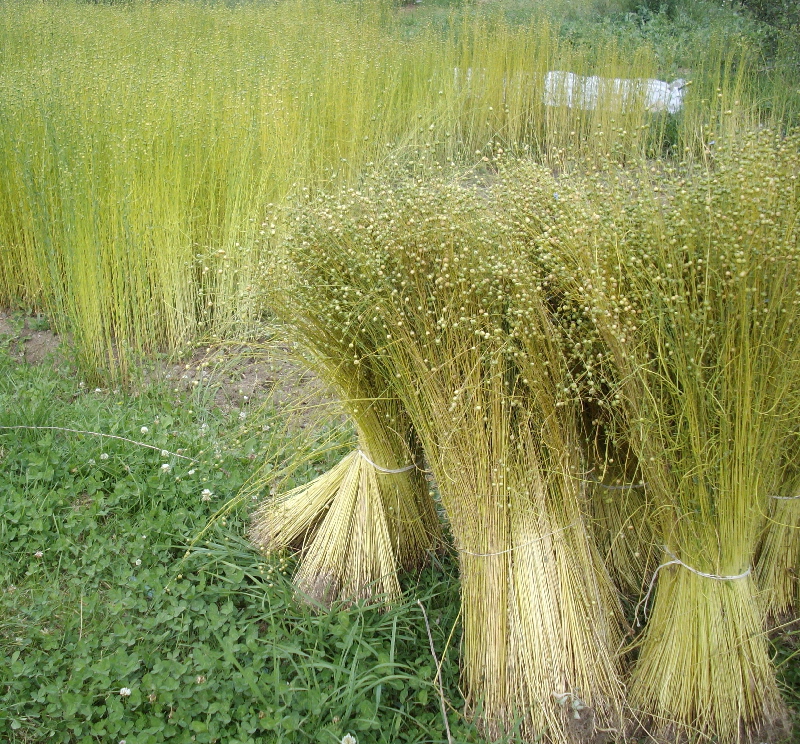
Linen, that lovely, crisp fabric that when freshly laundered and ironed has an affect on me like no other fabric. Flax, from which linen is made, is one of the oldest agricultural plants in the world. Over 5000 years ago the Egyptians named it “woven moonlight”, due to its very singular beauty. So it would seem that I am not the only one who has observed the allure of this durable fabric. A little less poetic, but all the more apt, is its Latin name: “linum usitatissimum”.

flax in the field

Flax was grown in ancient Egypt as early as the 4th millennium BC, and was used extensively for tunics and gowns, as well as for the fine cloth bandages that were used to wrap mummies. As a testament to the strength of this fabric, when King Tut’s tomb was opened, his linen curtains were found completely intact. I’ll be sure to mention that at my next client meeting when they ask if linen is to delicate for window treatments.

During the Middle Ages linen remained a clothing staple. Linen was often used for underclothes because it was light, cool, comfortable, and very easy to wash. Both men’s and women’s coats and cloaks were often woven of linen, and many women’s dresses were made of linen woven at home on a loom. Again with its durability and the fact that people didn’t own closets full of clothing (except for the very wealthy) it was a very popular fabric.

Over time, expanding trade routes brought linen—and the cultivation of flax—to Europe, the Near East, and the Americas. Different weights and types of linen fabrics were developed for different uses.

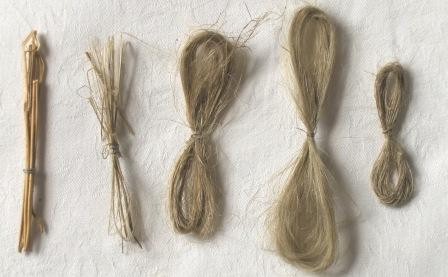
5stageflax

But first the plant needed to be processed. The processing of flax is a mult-step process. The flax plant is either completely pulled out of the ground or cut close to the root, and the seeds are removed through a process called winnowing. Fibers are loosened from the plant stalk through the retting process which involves a wetting and then allowing a the plant to begin to disintegrate. It can be a rather malodorous process.  Then the pulpy plants are ready for the scutching procedure. Scutching occurs between August and December, and involves removing the woody part of the stalk by crushing it between two rollers, leaving the fibers exposed. Shorter fibers are combed away, leaving only the long, desirable flax fibers behind.

After the fibers have been separated and processed, they are typically spun into yarns and woven or knit into linen textiles. These textiles can then be bleached, dyed, printed on, or finished with a number of treatments or coatings.

It is then available for you to purchase and the next question becomes whether to purchase Irish linen or Belgium linen? Flax was grown in Ireland for many years before advanced agricultural methods and more suitable climate led to the concentration of quality flax cultivation in northern Europe (Most of the world crop of quality flax is now grown in Northern France, Belgium and the Netherlands). Since about the 1950’s to 1960’s the flax fiber for Irish Linen yarn has been, almost exclusively, imported from France, Belgium and the Netherlands. So it depends more on where the flax was grown, than where it was processed. There has been an influx of fibers grown in China but they are considered inferior compared to the Northern European flax.

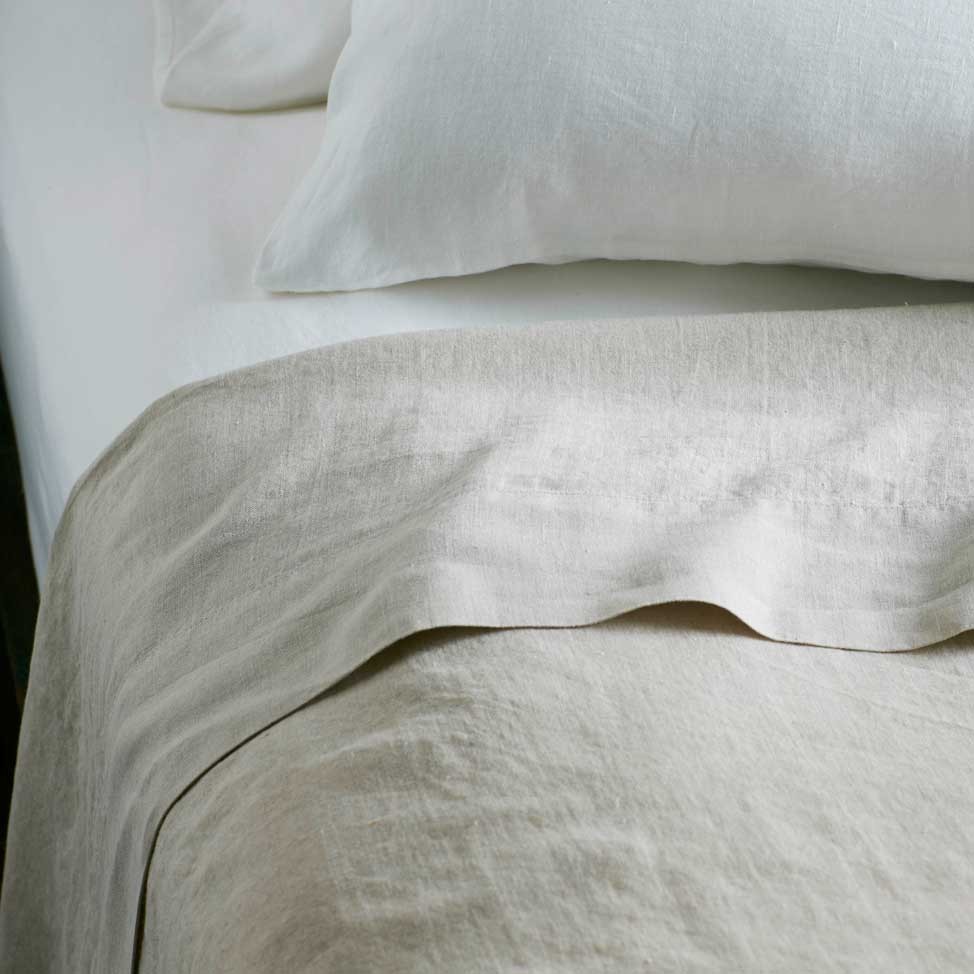
Linen sheets

Now as to its care…..Linen is one of the few fabrics that is stronger wet than dry. The fibers do not stretch and are resistant to damage from abrasion. However, because linen fibers have a very low elasticity, the fabric will eventually break if it is folded and ironed at the same place repeatedly.

Mildew, perspiration, and bleach can also damage the fabric, but it is resistant to moths and carpet beetles. Linen is relatively easy to take care of, since it resists dirt and stains, has no lint or pilling tendency, and can be dry-cleaned, machine-washed or steamed. It can withstand high temperatures, and has only moderate initial shrinkage.

Linen should not be dried too much by tumble drying: it is much easier to iron when damp because of its growth pattern. Linen wrinkles very easily, and so some more formal linen garments require ironing often, in order to maintain perfect smoothness. Nevertheless, the tendency to wrinkle is often considered part of the fabric’s particular “charm”.

hale-hanging-bed-1200

Some of my favorite sources for bed linens are Libeco Linens, de Le Cuona, Loro Piana, and NC Souther linens.

Just last week I purchased a complete new set of linens for my bed. We spread them upon the bed and then I immediately jumped in.  How can you not? It’s linen.

Burnt offerings

01 Monday Jan 2024

Posted by Holland Stephens in Architecture, Art, Products

≈ Leave a comment

Tags

black rock city, burning man, cedar siding, charred wood siding, Shou sugi ban, wood siding

reSawn-Timber-Co-As 2023 came to an end and we rang in the new year I remembered a tradition that my college roommates and I used to do which was write down all of the things that we had done in the past year that we NEVER wanted to repeat.

We would then light a big bonfire and ceremoniously throw our offerings in and watch the sparks rise into the sky and with their disappearance cast off all that we didn’t want to re-visit.

It didn’t always work, and of course you would sometimes find yourself back in the same situation that you thought that you had burnt and cast off forever but sometimes it was enough of a moment that you could indeed let a bad moment go.

As we all know fire is a powerful and sometimes violent force, which can yield its power in opposing ways. It can be a positive cathartic release or it can be an instrument of destruction. You need look no further than the annual Burning Man event as an example of the power of “the burn”.

burning-man-festival-2013

Burning Man is a week-long annual event that began in San Francisco’s Baker Beach in 1986 and migrated to the Black Rock Desert in northern Nevada. The event begins on the last Monday in August, and ends on the first Monday in September. Over 65,000 people attended the event in 2014, forming what is known as Black Rock City.

black rock city

Burning Man gets its name from the ritual burning of a large wooden effigy in the form of a man, which is set alight on Saturday evening.

I haven’t been myself but I’ve heard that it is an amazing event that everyone should experience at least once. I’ve heard it described as the largest performance art event that you’ll ever attend. I have a soft spot for performance art and for built artistic environments. No surprise here, especially given my chosen profession, that I would like to attend this sometime soon.

BurningManPhotoShoot 00000.-burningman19c

With all of this talk on the burning of wood I would be remiss to not share about Shou Sugi Ban. In case you haven’t heard of it, Shou sugi ban is a Japanese tradition of burning wood siding that dates back thousands of years. This method was done because the Japanese discovered that a heavily charred board used for siding was much more resistant to rot and insects, as well as far less likely to ignite when exposed to sparks or flames. The shou sugi ban method was vital in reducing fires but is now primarily used for its aesthetics and better performance in exterior applications.

There are few companies like resawn timber co. that are specializing in this type of wood.

Moyasu
Yashu
Murasaki
Kujaku

or Delta Mill Works who have a large collection of interior and exterior cladding

TIGER-AspenGreen-0x0
TIGERsmooth-NavajoWhite-0x0
TIGERsmooth-Teak-0x0
TIGER-Cedar-0x0

I think when its used in the right application, it can add an unusual textural quality to a project.

Sett-Designed-Studio-shou-sugi-ban-Office-via-Remodelista sett_studio-window-shou-sugi-ban-studio-interior-Remodelista

For a quick tutorial on how to make your own shou sugi ban siding check out this video tutorial.

I’m excited to try this since I already have my propane torch from another wood experiment I did a few years back. I’ll have to jounal about that one another time.

Let me know if you give it a go and how your burnt offering turned out.

Holland

Images courtesy of resawntimberco.com, http://www.assets.nydailynews.com, http://www.youtube.com/watch?v=woOHbbaj6fM, http://www.oliverfluck.com, http://www.parlez-vousphotography.quietplacetolive.com, http://www.resawntimberco.com/shou-sugi-ban.html, http://www.deltamillworks.com, http://www.gardenista.com

If you would like your home to be warm, inviting, stylish, and reflect your personal style contact us here to discuss our design services.

Enter your email address to follow this blog and receive notifications of new posts by email.

Search

Categories

  • Architecture
  • Art
  • Interior business
  • Interiors
  • Landscapes
  • Products
  • Uncategorized

Content Etiquette

I do not claim ownership of any of the imagery on this blog, unless otherwise noted. I make every attempt to give credit whenever possible. There are occasions when I do not have information, and will gladly add credit or remove the image if contacted by the owner. Thank you.
  • April 2025
  • January 2025
  • December 2024
  • November 2024
  • October 2024
  • September 2024
  • August 2024
  • July 2024
  • June 2024
  • May 2024
  • April 2024
  • March 2024
  • February 2024
  • January 2024
  • December 2023
  • Land and Sky
  • Indigo
  • Architecture on Ice
  • The Cost Of Perfection
  • Homes of creatives

Search

Recent Posts

  • Land and Sky April 1, 2025
  • Indigo January 1, 2025
  • Architecture on Ice December 1, 2024
  • The Cost Of Perfection November 1, 2024
  • Homes of creatives October 1, 2024

Enter your email address to follow this blog and receive notifications of new posts by email.

Join 282 other subscribers

Create a website or blog at WordPress.com

  • Subscribe Subscribed
    • Holland Stephens Interiors
    • Join 46 other subscribers
    • Already have a WordPress.com account? Log in now.
    • Holland Stephens Interiors
    • Subscribe Subscribed
    • Sign up
    • Log in
    • Report this content
    • View site in Reader
    • Manage subscriptions
    • Collapse this bar
 

Loading Comments...