
Tags
Absolut ice bar, Arata Isozaki, Art, Cai Guo-Quang, Design, Do-Ho Suh, fung collaboratives, Harbin International snow and ice festival, Heilongjiang province, Ice architecture, Ice art, Ice Hotel, ice sculpture, inspiration, Jukkasjärvi, Kemi Finland, Lapland, Lummi Linna, Morphosis, Penal Colony, snow sculpture, Snowcastle of Kemi, Tadao Ando, Tatsuo Miyajima, The snow show, Yoko Ono, Zaha Hadid
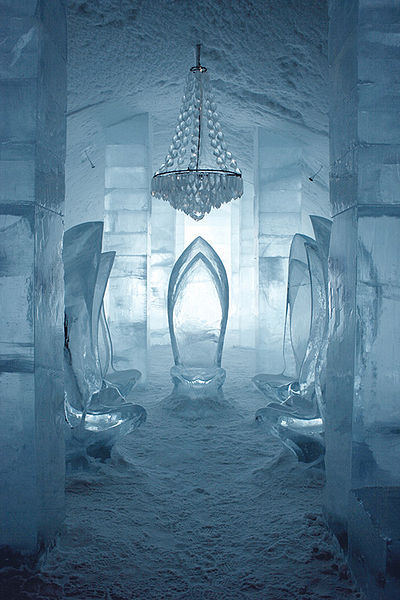
As the temperatures dip this time of year and our homes are covered with snow and ice I started thinking about structures that were made of snow and ice from the inside out. My search lead me to some interesting ice architecture that I thought I would share with you.
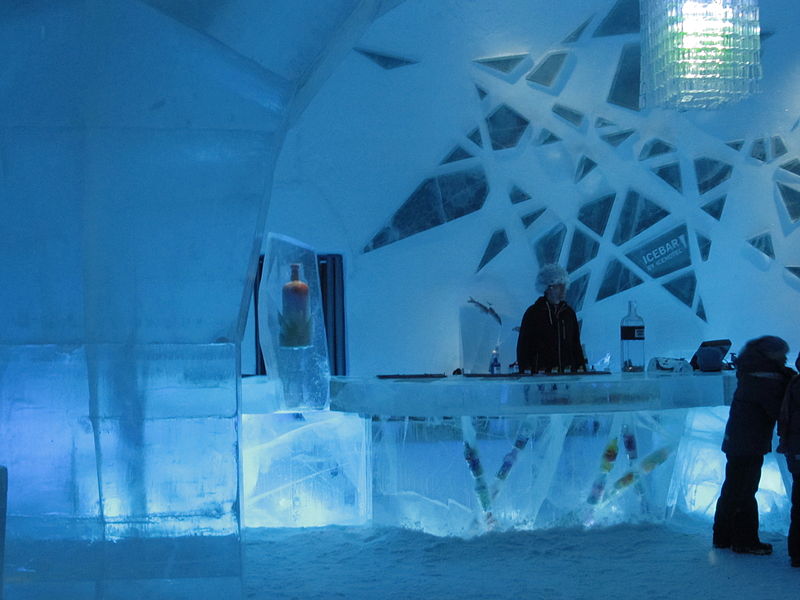
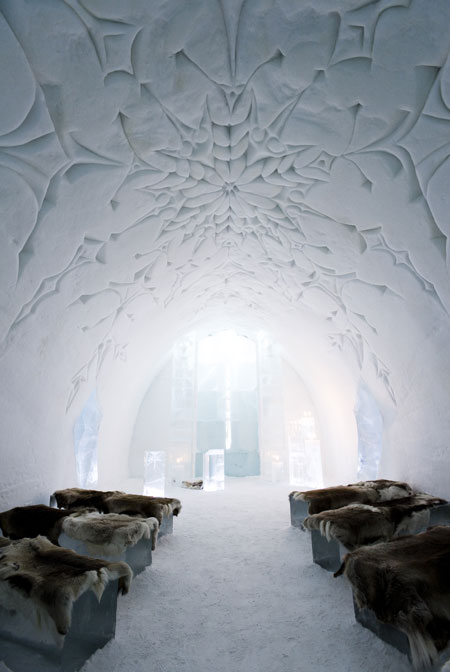
The ICE HOTEL in the village of Jukkasjärvi, about 17 kilometres (11 mi) from Kiruna, in northern Sweden, was the world’s first ice hotel. After its first opening in 1990, the hotel has been erected each year from December to April.
The hotel, including the chairs and beds, is constructed from snow and ice blocks taken from the nearby Torne River. The structure remains below freezing, around 23 °F (−5 °C) which can make staying overnight at the hotel challenging but they have special insulated mattresses, reindeer hides, and down duvets for their guest. Most guest usually stay one night then move to the heated quarters on the grounds.
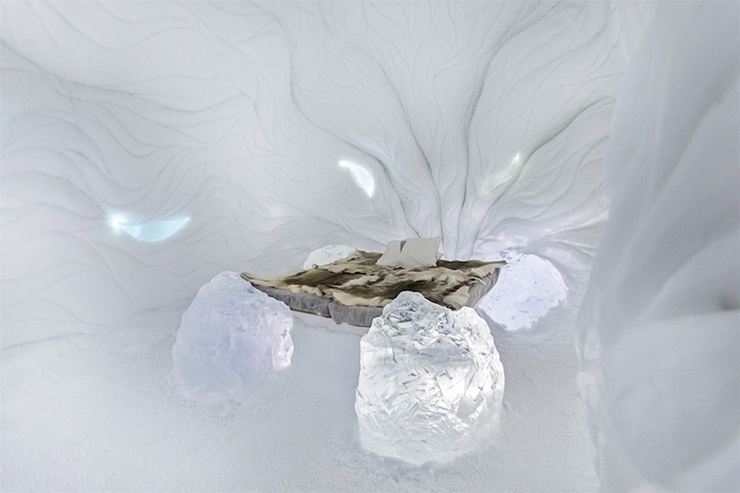 When completed, the hotel features a bar, church, main hall, reception area, plus rooms and suites for over 100 guests. Each suite is unique and the architecture of the hotel is changed each year since it is rebuilt from scratch. Every year, artists submit their ideas for suites, and a jury selects about 50 artists to create the church, icebar, reception, main hall and suites. When spring comes, everything melts away and returns to the Torne River.
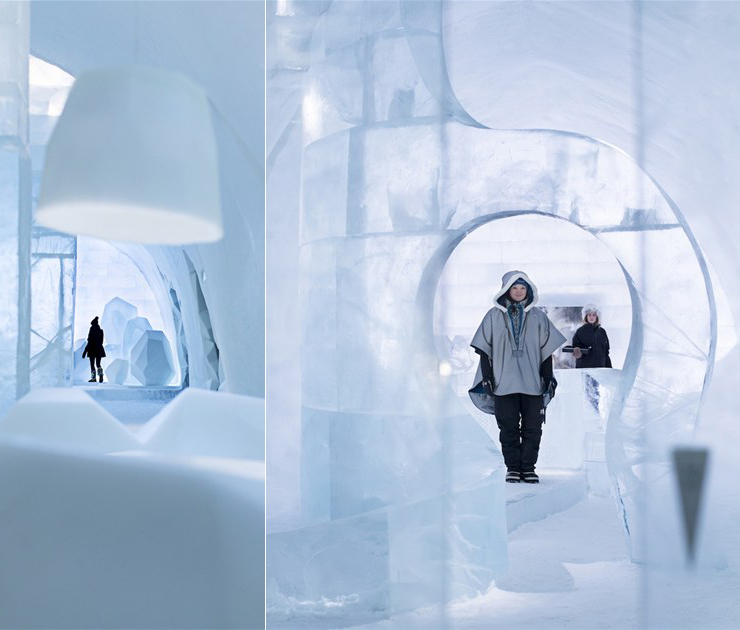
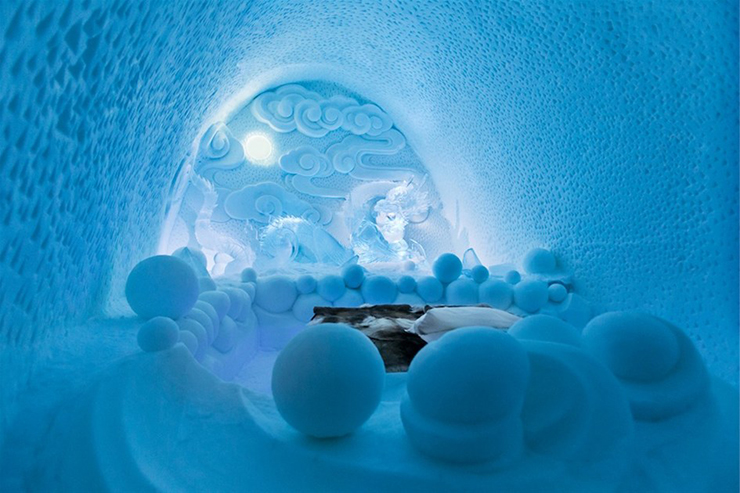
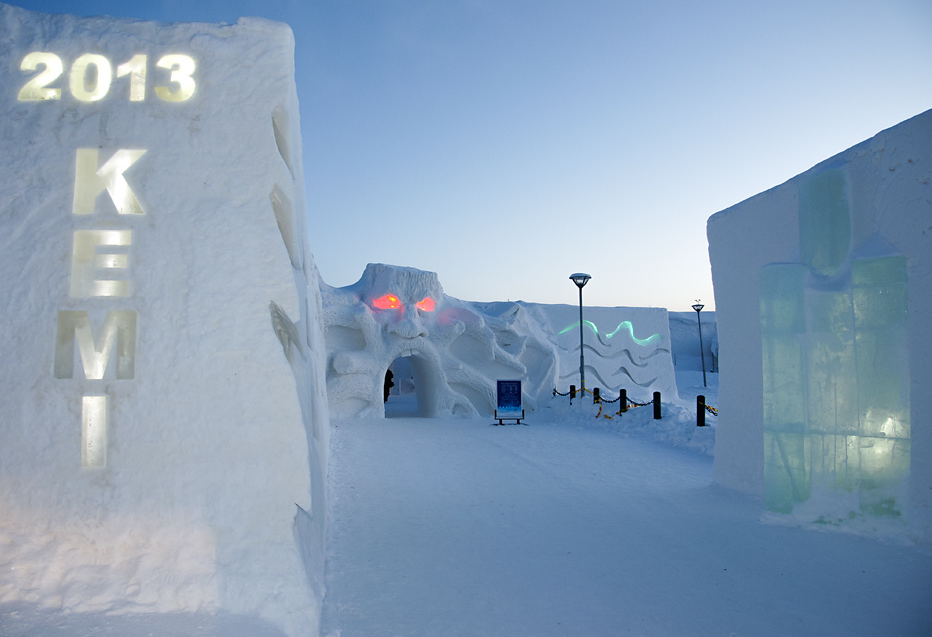
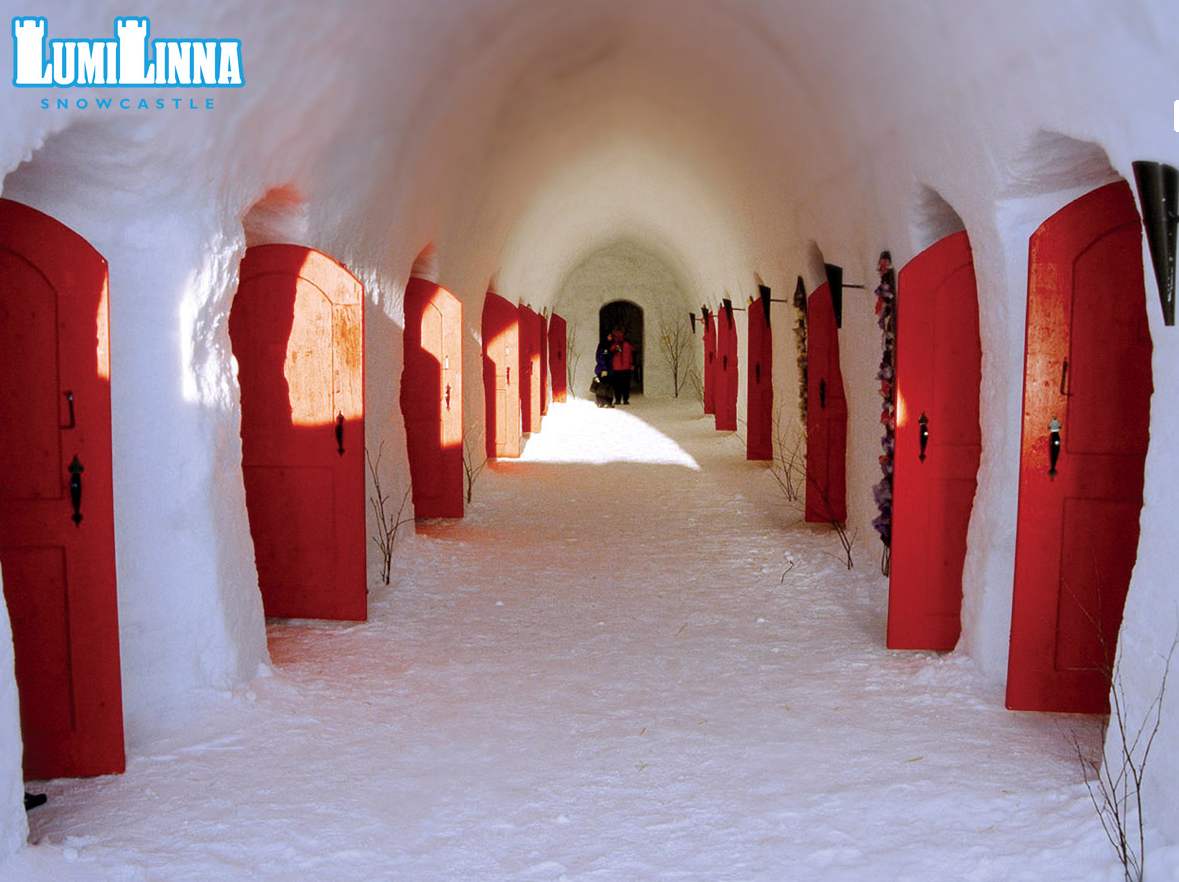
 In Finland from December through March the Snowcastle of Kemi is the biggest snow fort in the world. It is rebuilt every winter with a different style of architecture in Kemi, Finland. The area covered by the castle has varied from 13,000 to over 20,000 square metres. The highest towers have been over 20 metres high and longest walls over 1,000 metres long, and the castle has had up to three stories. Despite its varying configurations, the snow castle has a few recurring elements: a chapel, a restaurant and a hotel.
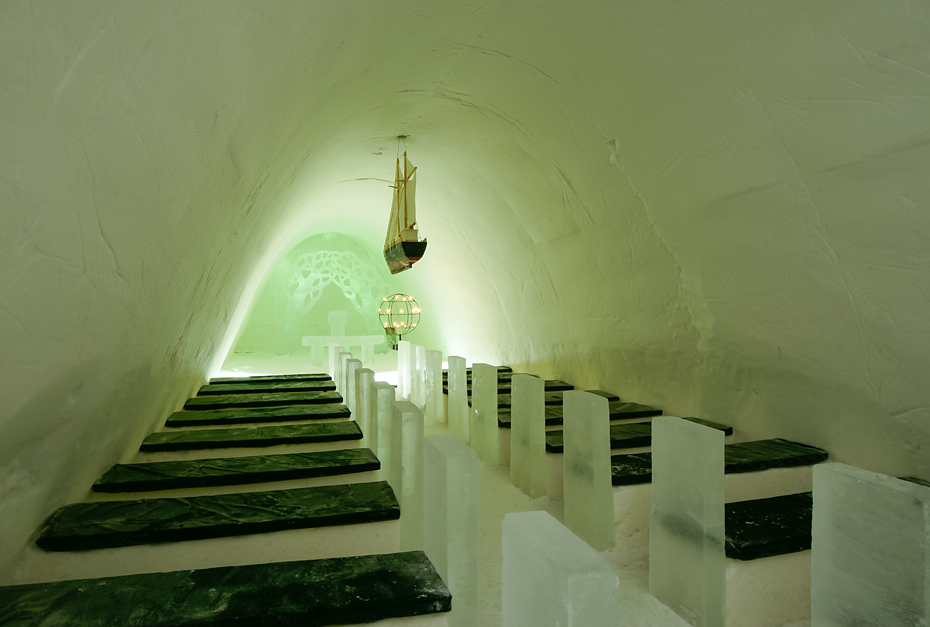

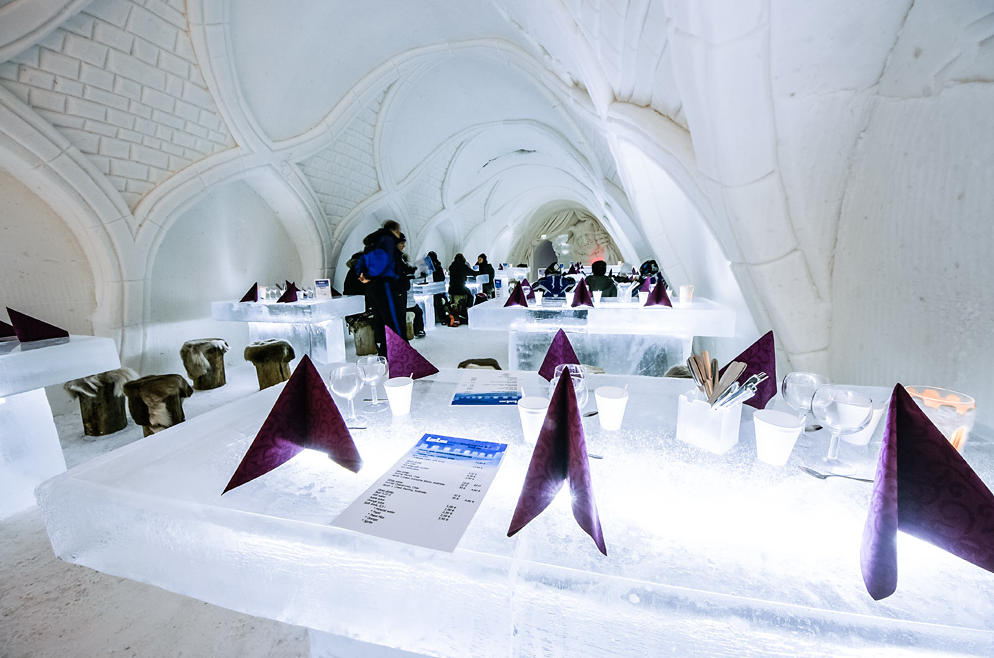 Also in Finland in 2004 was an international project called the The Snow Show. It was a unique artistic collaboration between artists and architects of international renown, a first-of-its-kind exhibition that explored the structures that result when artists and architects experiment with building in snow and ice. The results of this global cultural project were on view in Finland’s Lapland.
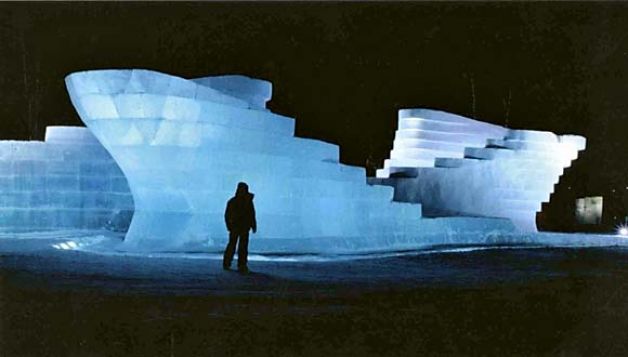 Above is the structure that Zaha Hadid and Cai Guo-Qiang built. Hadid had streamlined blocks of ice that cantilever into the air like the prow of a racing ship. Artist Cai Guo-Qiang then concocted a mix of vodka and ethanol-based gel that, poured onto the twin forms at night, spilling in all directions, creating pools of transient flames.
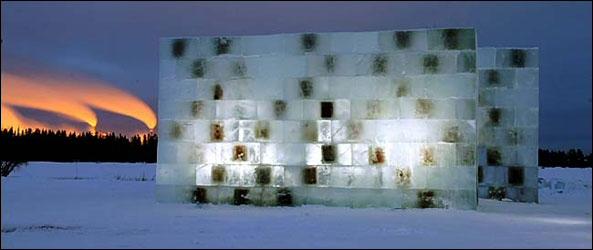 The above was erected by Morphosis + Do-Ho Suh. The piece was called Fluid fossils. Embedded objects in a constructed archaeology, this project explores the transformation of matter in time.
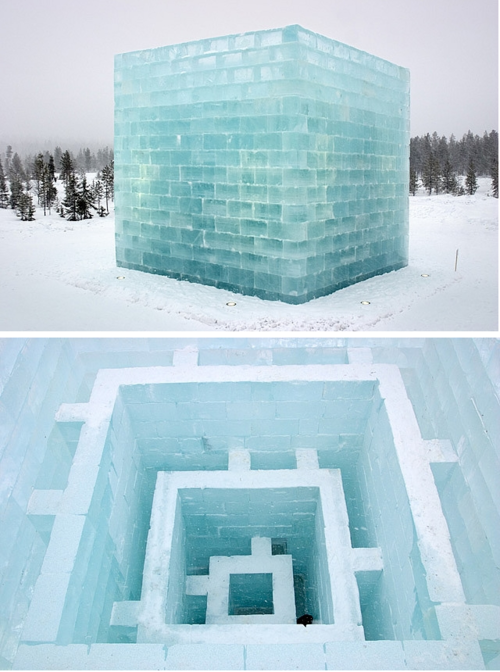 Above is Penal Colony by Yoko Ono & Arata Isozaki. Ono described the piece with the following piece of poetry.
PENAL COLONY
spring passes
and one remembers one’s innocence
summer passes
and one remembers one’s exuberance
autumn passes
and one remembers one’s reverence
winter passes
and one remembers one’s perseverance
there is a season that never passes
and that is the season of glass
© Yoko Ono ‘81

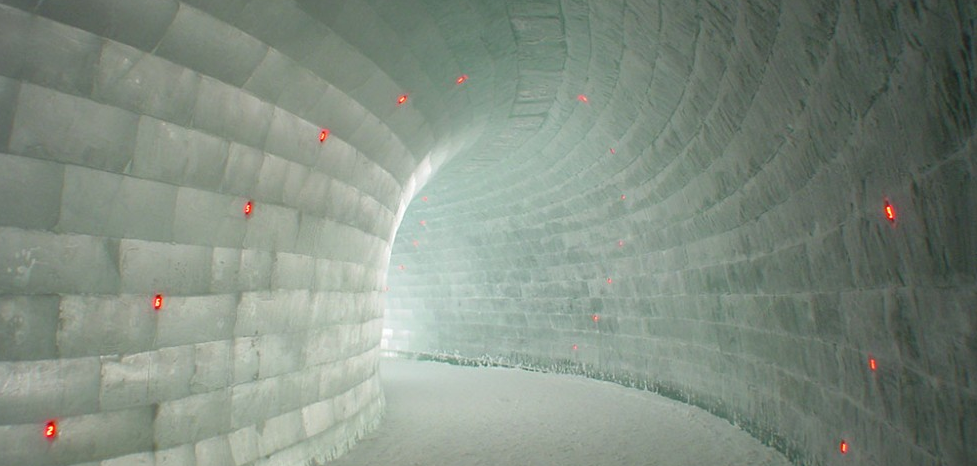 Above we see images of Ice Time Tunnel by Tatsuo Miyajima & Tadao Ando. It was described by Ando as follows.
“Using ice, an ephemeral and formless material, I tried to create a minimal and purified form, with a motif of continuous curved line. What emerged in the geometrical space of ice is a sequence of light and air. The abstract concept, sequence, also responds to Tatsuo Miyajima’s artwork, whose theme is time: from past to present and from present to future. The collaboration, ICE TIME TUNNEL has been completed by combining a sequence of my architecture and time and space in Miyajima’s work.”
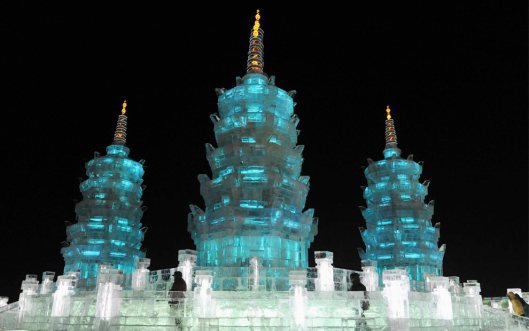 On the another side of the world is the Harbin International Ice and Snow Festival in China’s Heilongjiang province. It lasts for weeks, drawing Chinese and foreign visitors. Nearly 10,000 people were involved in making the sculptures, which are fashioned from huge ice blocks cut from a local frozen river and from blocks of man-made snow. The ice and snow are assembled and sculpted to resemble huge buildings, snow maidens and other structures, some of them lit up fancifully at night as seen above and below.
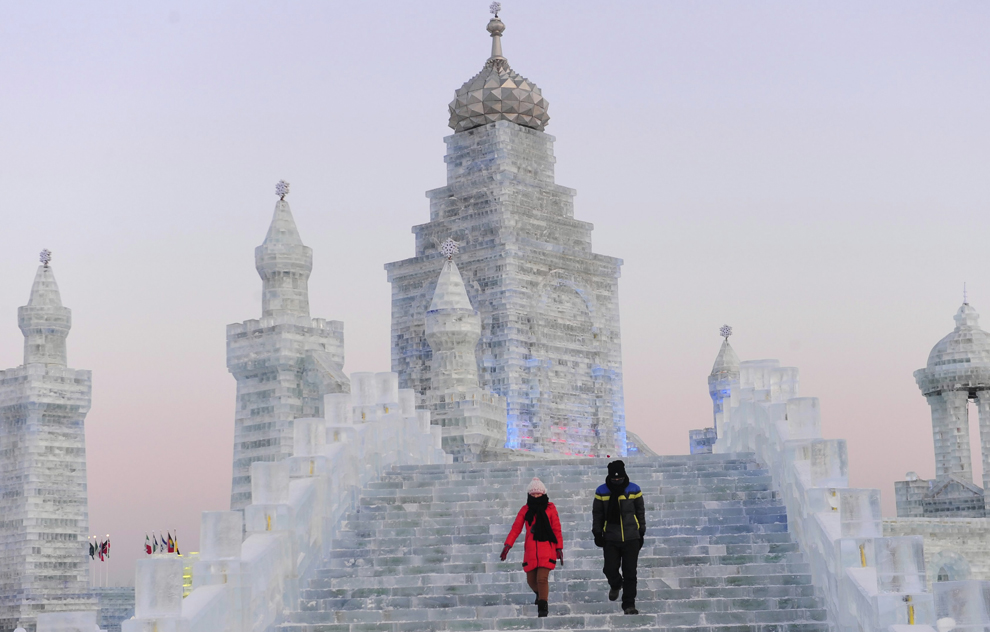
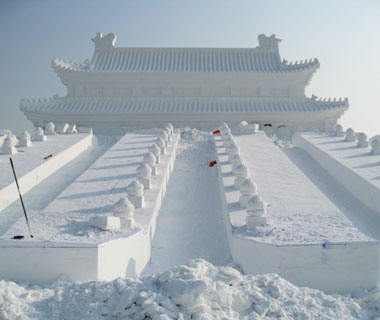
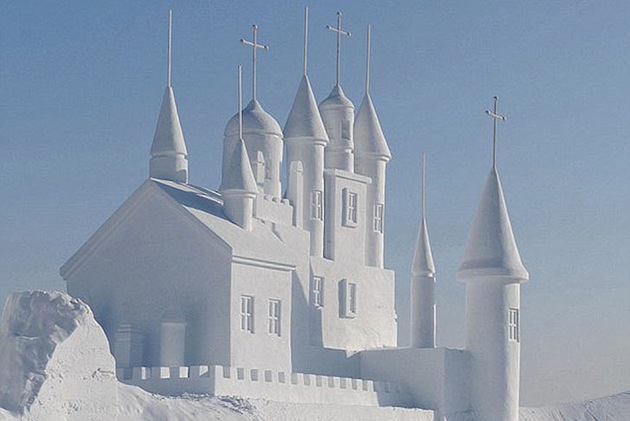
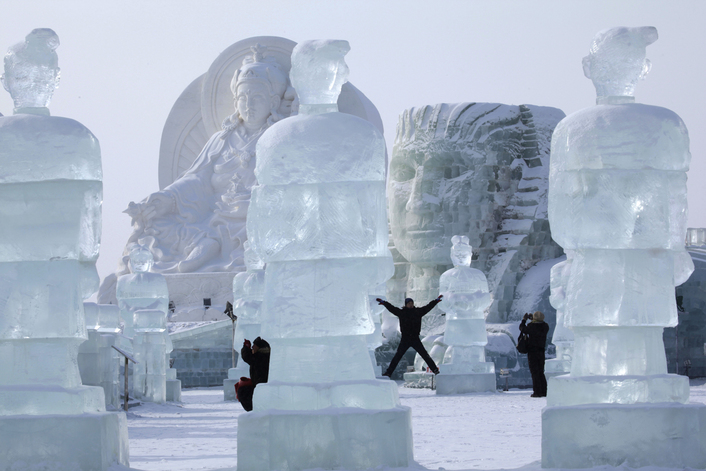
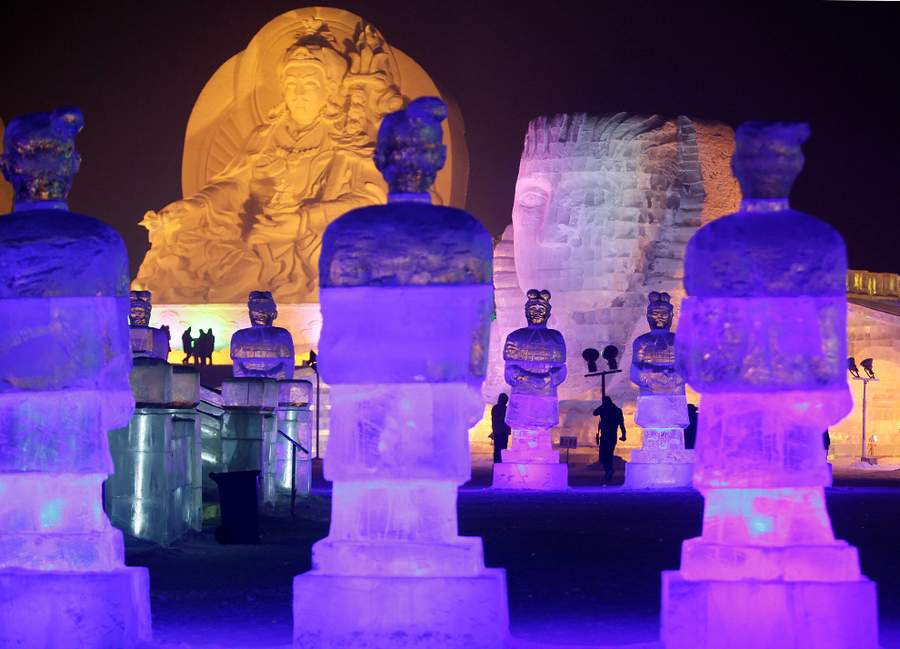 So while it may be chilly out there, it’s good to see that people around the world are making more than just the best of it. They are creating sculptural and architectural works of art.
Images courtesy of Boston.com, travelandleasure.com, inthraled.com, english.peopledaily.com, washingtonpost.com, inhabit.com, designbuildideas.eu, wikipedia.com, visitkemi.fi, artwisecurators.com












 Holland Stephens Interiors