• About

Holland Stephens Interiors

~ all things design: interiors + architecture + entertaining + art …..

Holland Stephens Interiors

Author Archives: Holland Stephens

Behind the Veil

01 Monday Apr 2024

Posted by Holland Stephens in Interior business, Interiors

≈ Leave a comment

Tags

cost of interior design services, design services, hourly rates for interior designers, how much does it cost to furnish a room, how to price interior design services, how to work with an interior designer, interior design pricing, pricing your interior design services, rates for design services

Veil

“Just how much do you charge for your services?” a question that is always asked and is sometimes quite difficult to answer. Why? Because it depends on the level of service that a client wants. Once that is defined then the answer becomes quite clear. I came across an article the other day by another designer on this very subject and it was so good that I thought I would repost it here. Forgive me if this is a bit of a business related post but I’ll add in my take on it as well at the end. It was written by Linda Merrill who is the founder of the interior design company, Decorative Surroundings in Boston, MA.

Here is her article

Several years ago, at an architecture trade show in Boston, I attended a panel discussion on how to price design services. I was new in business and assumed that most of the other attendees would also be business “newbies”. I was surprised, shocked even, when the audience was asked by a show of hands how long they’d been in business. While at least half the attendees were new business owners, the rest had been in business over five years and some had been around for over twenty years. It was a real eye-opener and I realized that no matter how long one has been in business, pricing one’s services is complex and always in need of evaluation. Given the complexity of the issue for professional architects and designers, it’s no wonder that those seeking design services are nearly always confused about the issue. Let’s face it, we don’t know what we don’t know and we all make assumptions based on limited knowledge.
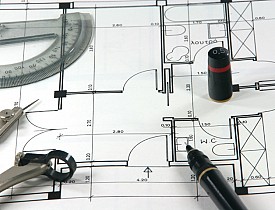
blueprint

The single most asked question made to a designer is: “What will this cost me?” And most designers will put off the answer until they know more about the entire scope of the project, the clients and what is involved. It’s no wonder there is confusion and, at times, suspicion about the process.

There are some basic ways that the majority of interior designers and decorators charge for their services:

1.Hourly rate for each and every moment spent working on the project: This includes all meetings, telephone calls, emails, shopping, designing/drafting, buying, installations and logistics. The hourly rate itself varies by geographic region and experience/professional standing of the designer, but roughly it’s between $125-$250 per hour. Larger firms will have tiered structures based on who in the firm is working on the project (assistant designers vs. the owner, for instance) and one-person shops will generally have a single established hourly rate. Clients pay direct to retail stores and hire their own contractors: Clients can control the total dollars spent to the extent that they are responsive to the designer’s queries and quick to make decisions, and do the legwork of ordering retail products and receiving shipments themselves.

2.Hourly PLUS markup on goods: Includes all of the above, plus a markup on custom and trade-only merchandise, and a percentage on any retail purchases made by the designer on the client’s behalf. This additional markup covers the design firm’s time and expenses of managing all the ordering, logistics, trouble-shooting, delivery and installation of the merchandise. If the client wishes for a turn-key level of service where their only job is to approve and pay for the design, this is the type of plan they will be looking at.

3.Flat fee rate: For obvious reasons, a flat fee has both positive and negative aspects to it. For the clients, they sign the contract knowing exactly what they will be paying their designer and there should be no surprises. For the designer, they can establish a specific payment structure to cover costs and provide income at regular intervals. The downside for both client and designer is that the entire plan needs to be clearly understood at the outset. Any changes or additions to the original plan may require a renegotiation of the contract. Designer’s fear that a flat rate means the client will lose respect for their time and waste it because they aren’t paying by the hour. A project estimated to take 100 hours that suddenly takes nearly 200 means a big financial loss for a designer. On the other hand, clients fear the designer will pad their time in order to charge more.

4.Percentage of the entire budget: This means that every dollar spent on a project is tallied up at the end and the designer receives a percentage, which is usually in the 15-30% range. A budget is established from the start and payments are made based on the estimated total budget and then by the end of the project, the total expenditures are added up to be sure the designer has received the agreed upon percentage. For the most part, the flat fee rate (#3 above) is calculated using this same equation, but is capped, whereas the percentage system is not capped.

As you can see, “What will this cost me?” is not an easy question to answer! In fact, it’s not THE question to be asking. The actual question should be “How do you bill for your services?” allowing the designer to describe their scope of services and how they bill for them. The client needs to provide specific details with regards to their budget and exactly what type of service they are looking for. Unless a designer charges a simple flat fee to provide a design plan for a space, with no added procurement services offered and little alterations to the plan, they will simply not be able to give a price without knowing the budget and scope of the project because the ranges are too varied.

A furnished living room can be $10,000 or $100,000 and more – depending on what the client wants. The budget is always in the client’s control and ultimately the designer can either accept the job within the stated budget, or will choose not to. Contrary to popular belief, designers are not looking to simply spend as much of the client’s money as we can. We want to provide the right services for the clients needs and to be fairly compensated for our efforts and experience.
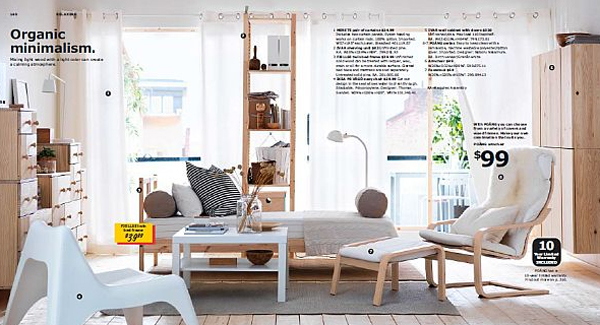
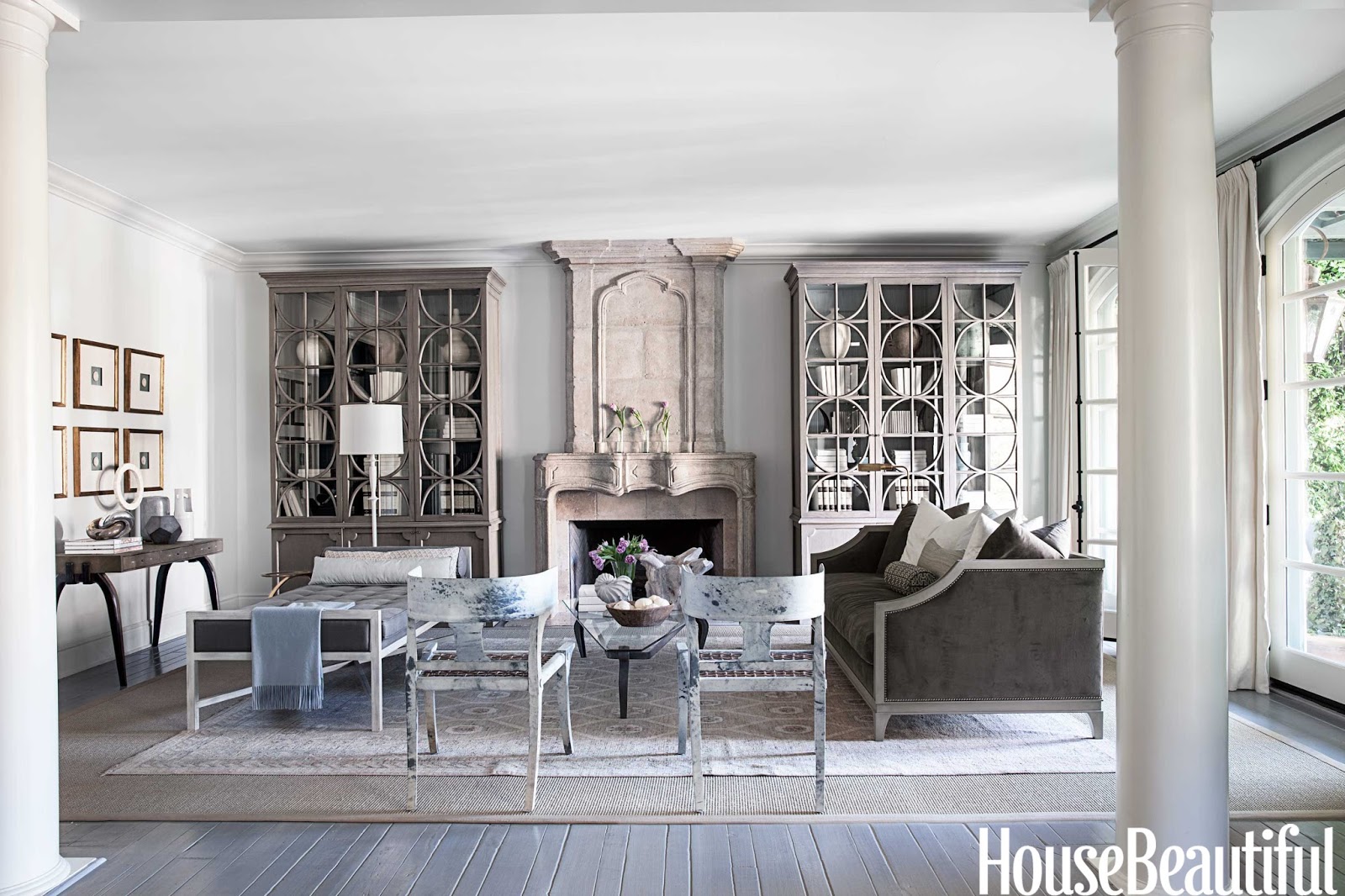
ikea-furniture-for-living-room-idea

When contemplating the potential cost and value of design services, consider the way you want to work with the designer:

1) You want a designer to create a vision and design plan only: You will be doing all the legwork, hiring and managing contractors, ordering furniture and dealing with all the logistics and trouble shooting as needed. You are willing to put in the work involved so that as many of your dollars as possible go towards the actual decoration of your space.

2) In addition to a design plan, you want a full-scale, turn-key project where you only want to have to speak with the design firm and they will deal with all other parties involved: Additionally, the majority of the purchases are delivered and installed on a single installation day (aka “the reveal”) versus piece-by-piece deliveries. This level of service includes additional charges for insured warehousing, and two sets of delivery charges – one to deliver and inspect furnishings at the warehouse and another to then re-deliver to the home.

3) Some negotiated combination of the above.

As with everything else, we pay for things with time or money and this is certainly true when it comes to interior design services. -Linda Merrill

happy sad face

Linda did a great job of breaking the fee structures down. It all comes down to understanding what expectation the client has. It also involves clearly defining for them how to achieve that and what that will cost. Sometimes it can mean re-defining their expectations. Doing this can mean all the difference in the world between having a happy client and one that is displeased.  People in this business are usually “PLEASERS”. Most of us want nothing more than at the end of the project for the client to be really excited about their home and pleased with all of the work that we have done to make their dreams a reality.

In my own business I have found that what works best is to work on a scaled hourly wage.  There is design time, drafting and meeting time, and administrative time (where project purchasing and management occurs). I then purchase goods on the clients behalf and we price it at the suggested retail price. So the client pays the same amount whether they were purchasing it or we are. However, it benefits the client to use my expertise and resources to purchase for them. I have the experience to know all of the issues that can come about in purchasing from the myriad of vendors out there and we know how to deal with issues when they arise. It also allows me to have control over delivery times and thus timelines on a job.

I’ve heard of other designers who are also offering design services in a type of “design in a box” format. This is where the client pays a scaled flat fee for a type of room in their home and then they are responsible for sending the designer a measured plan and elevations of the room with pictures of the furniture they would like to keep and a few images of rooms that they like. The designer then puts together a concept board and shopping list for the client to handle on their own.  I haven’t tried this yet and I feel a bit hesitant about offering it because this is such a personal business. I like to get to know my clients and find out what interests they have and what would really make their home special. Finding out that they have an amazing collection of photographs or that they have strong familial tie to a certain country or place, for example can mean all the difference in the design of a room that really speaks to them. Remember what I said about “Pleasers”.  I want their home to be a reflection of who they are and what they do or have strong ties to, as well as it being really beautiful.

Let me know what you think?? Has anyone used this type of service before and what was your experience with it?  I always try to keep an open mind especially as I’m growing my business.

So as you can see the veil is transparent as long as I am asking the client all of the right questions to begin with and I’ve given them the answer that addresses all of their needs.

Images courtesy of dphotograper.co,uk, Vangelis Thomaidis/sxc.hu, fiumaf.com, cococozy.com, subversivecopyeditor.com

If you would like your home to be warm, inviting, stylish, and reflect your personal style contact us here to discuss our design services.


 

Warp and Weft

01 Friday Mar 2024

Posted by Holland Stephens in Interiors, Products

≈ 1 Comment

Tags

Bergamot studio, bias, Designer fabric line, Designing your own fabrics, Fabric design, fabric line, Kassana Holden, Lauren Liess fabrics, Lauren Liess interior design, Selvedge, Textile design, Victoria Larson, Warp and weft, Yacht interior design

Silk damask embroidered

I frequently find myself surrounded by piles of beautiful fabrics. Mind you they are usually just small 6″ x 6″ square samples of a fabric but nonetheless, they are one of the biggest pieces of the design puzzle. Finding just the right fabric can sometimes bring an entire room together. I remember when I was in school we spent hours studying line, form, building code, auto cad, etc. but fabric was but a small portion of the program that I was in. It was usually only at the very end of a semester that we would quickly pull a few fabrics together to present along with the rest of the architecture that we had been slaving over.

But I have always had a particular weakness for fabrics, see my earlier post on Linen.  I had learned quite a bit about linen and about textiles in general from one of my first jobs out of college. I was working for a woman who had just started her company importing Italian and Portuguese textiles. She was a great designer and looking back now I realize how much that experience was a seed for the career I have now.

It wasn’t until I worked for a local high end residential firm here in Seattle that I discovered “fabric”. I had the unique opportunity to be assigned to specifying an entire ship. It was being re-done with nearly all of the fabrics being replaced. It was basically like doing a hotel, except every room was different. Each room had to be luxurious, comfortable, and able to withstand multiple guests and deal with extra harsh conditions at sea such as salt water air, and bright sun.  The image below isn’t the boat I worked on but was similar in style. Our client was very private so no pictures were allowed.

Quasar-88-Mega-Yacht-a-Luxury-Palace-on-Water-5-485x291
hemisphere-yacht-deck

I started from the top deck and worked my way down to the underwater lounge. There were fabrics for pillows, sofas, chairs, window coverings, bedding, ceiling panels and built ins. There were also some new furniture pieces to be specified but the majority of my work was to come up with the fabric themes for each of the rooms. I would work through a floor and then present to my boss for review. Sometimes I was on the money, sometimes I had to replace a fabric or two. Sometimes I had to go back and re-work it all. (Wait a second, no one told me he hated green.) But frustration aside, it was a great experience and I really honed my eye.

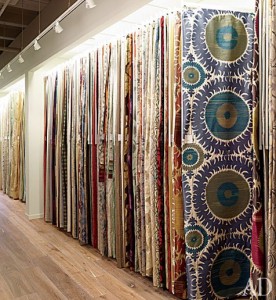
donghia-showroom-01-fabric-276x300

Now that I have my own firm, I still find myself going through wing after wing at the design center, except now its my design, for my client that I’m trying to find that really special fabric for. I can have a very specific idea in my head about what I am looking for and sometimes I can’t seem to find it. This frustration led me to wondering about designing my own fabric line.

There are some other women in the industry that by watching their progress have shown me what a small fabric line can look like. People like Lauren Liess out of Virginia.

0314Lauren-Liess-5165

Victoria Larson in Annapolis

Victoria Larson

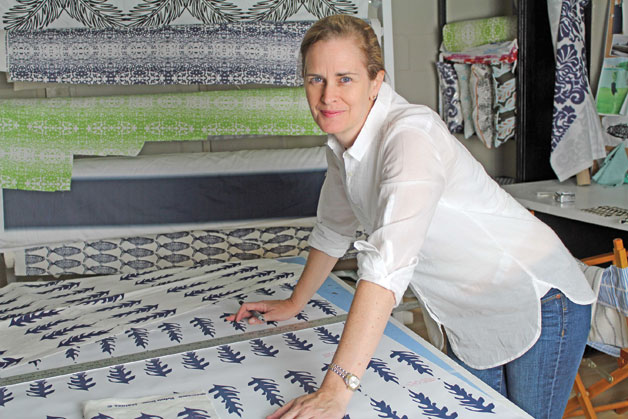
Locally we have Kassana Holden, from Vashon Island who not only does the designs for her fabrics she also prints them right there in her studio using her wide format Epson printer.

Screen Shot 2014-03-28 at 12.12.57 AM

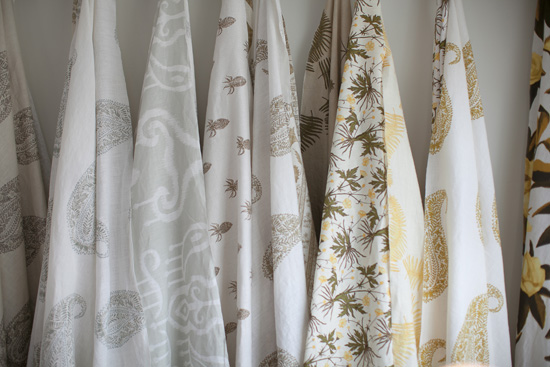
Watching their progress has started me on a journey. Not exactly sure where I will end up with this but I’ve got a big stack of books on textile design, and I’ve been combing the internet looking for ways to get my designs printed on the types of fabrics I love.  I’ve already found out so much. Everything from resist-dyed silk satin damask (rinzu), embroidered with silk and metallic thread as you see in the image I posted at the very top.

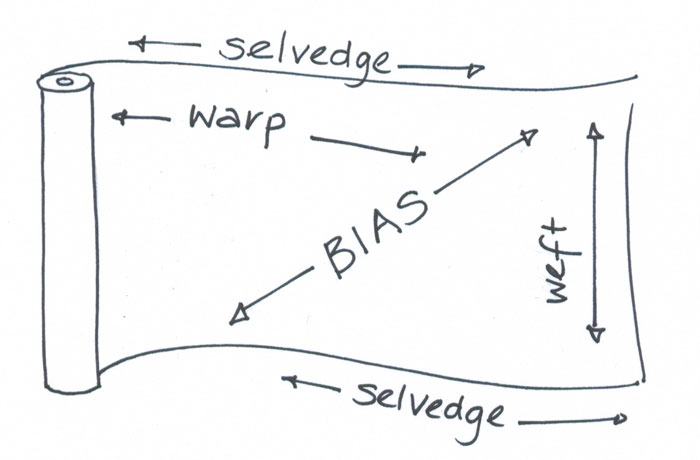
warp weft image

To the basics of fabric design like what warp, weft, selvedge, and bias mean. I’ll keep you posted as I move forward and look forward to your feed back as I get ready to select my own designs.

Images courtesy of http://www.metmuseum.org, http://www.boatsinternational.com, http://www.frannbilus.com, architecturaldigest.com http://www.laurenliess.com, http://www.homeanddesign.com, http://www.bergamotstudio.com, http://www.the-stichery.co.uk

If you would like your home to be warm, inviting, stylish, and reflect your personal style contact us here to discuss our design services.

Woven Moonlight

01 Thursday Feb 2024

Posted by Holland Stephens in Interiors, Products

≈ 1 Comment

Tags

bedlinens, Belgian linen, flax, history of linen, Irish linen, linen, linen care

linen 1

Linen, that lovely, crisp fabric that when freshly laundered and ironed has an affect on me like no other fabric. Flax, from which linen is made, is one of the oldest agricultural plants in the world. Over 5000 years ago the Egyptians named it “woven moonlight”, due to its very singular beauty. So it would seem that I am not the only one who has observed the allure of this durable fabric. A little less poetic, but all the more apt, is its Latin name: “linum usitatissimum”.

flax in the field

Flax was grown in ancient Egypt as early as the 4th millennium BC, and was used extensively for tunics and gowns, as well as for the fine cloth bandages that were used to wrap mummies. As a testament to the strength of this fabric, when King Tut’s tomb was opened, his linen curtains were found completely intact. I’ll be sure to mention that at my next client meeting when they ask if linen is to delicate for window treatments.

During the Middle Ages linen remained a clothing staple. Linen was often used for underclothes because it was light, cool, comfortable, and very easy to wash. Both men’s and women’s coats and cloaks were often woven of linen, and many women’s dresses were made of linen woven at home on a loom. Again with its durability and the fact that people didn’t own closets full of clothing (except for the very wealthy) it was a very popular fabric.

Over time, expanding trade routes brought linen—and the cultivation of flax—to Europe, the Near East, and the Americas. Different weights and types of linen fabrics were developed for different uses.

5stageflax

But first the plant needed to be processed. The processing of flax is a mult-step process. The flax plant is either completely pulled out of the ground or cut close to the root, and the seeds are removed through a process called winnowing. Fibers are loosened from the plant stalk through the retting process which involves a wetting and then allowing a the plant to begin to disintegrate. It can be a rather malodorous process.  Then the pulpy plants are ready for the scutching procedure. Scutching occurs between August and December, and involves removing the woody part of the stalk by crushing it between two rollers, leaving the fibers exposed. Shorter fibers are combed away, leaving only the long, desirable flax fibers behind.

After the fibers have been separated and processed, they are typically spun into yarns and woven or knit into linen textiles. These textiles can then be bleached, dyed, printed on, or finished with a number of treatments or coatings.

It is then available for you to purchase and the next question becomes whether to purchase Irish linen or Belgium linen? Flax was grown in Ireland for many years before advanced agricultural methods and more suitable climate led to the concentration of quality flax cultivation in northern Europe (Most of the world crop of quality flax is now grown in Northern France, Belgium and the Netherlands). Since about the 1950’s to 1960’s the flax fiber for Irish Linen yarn has been, almost exclusively, imported from France, Belgium and the Netherlands. So it depends more on where the flax was grown, than where it was processed. There has been an influx of fibers grown in China but they are considered inferior compared to the Northern European flax.

Linen sheets

Now as to its care…..Linen is one of the few fabrics that is stronger wet than dry. The fibers do not stretch and are resistant to damage from abrasion. However, because linen fibers have a very low elasticity, the fabric will eventually break if it is folded and ironed at the same place repeatedly.

Mildew, perspiration, and bleach can also damage the fabric, but it is resistant to moths and carpet beetles. Linen is relatively easy to take care of, since it resists dirt and stains, has no lint or pilling tendency, and can be dry-cleaned, machine-washed or steamed. It can withstand high temperatures, and has only moderate initial shrinkage.

Linen should not be dried too much by tumble drying: it is much easier to iron when damp because of its growth pattern. Linen wrinkles very easily, and so some more formal linen garments require ironing often, in order to maintain perfect smoothness. Nevertheless, the tendency to wrinkle is often considered part of the fabric’s particular “charm”.

hale-hanging-bed-1200

Some of my favorite sources for bed linens are Libeco Linens, de Le Cuona, Loro Piana, and NC Souther linens.

Just last week I purchased a complete new set of linens for my bed. We spread them upon the bed and then I immediately jumped in.  How can you not? It’s linen.

Burnt offerings

01 Monday Jan 2024

Posted by Holland Stephens in Architecture, Art, Products

≈ Leave a comment

Tags

black rock city, burning man, cedar siding, charred wood siding, Shou sugi ban, wood siding

reSawn-Timber-Co-As 2023 came to an end and we rang in the new year I remembered a tradition that my college roommates and I used to do which was write down all of the things that we had done in the past year that we NEVER wanted to repeat.

We would then light a big bonfire and ceremoniously throw our offerings in and watch the sparks rise into the sky and with their disappearance cast off all that we didn’t want to re-visit.

It didn’t always work, and of course you would sometimes find yourself back in the same situation that you thought that you had burnt and cast off forever but sometimes it was enough of a moment that you could indeed let a bad moment go.

As we all know fire is a powerful and sometimes violent force, which can yield its power in opposing ways. It can be a positive cathartic release or it can be an instrument of destruction. You need look no further than the annual Burning Man event as an example of the power of “the burn”.

burning-man-festival-2013

Burning Man is a week-long annual event that began in San Francisco’s Baker Beach in 1986 and migrated to the Black Rock Desert in northern Nevada. The event begins on the last Monday in August, and ends on the first Monday in September. Over 65,000 people attended the event in 2014, forming what is known as Black Rock City.

black rock city

Burning Man gets its name from the ritual burning of a large wooden effigy in the form of a man, which is set alight on Saturday evening.

I haven’t been myself but I’ve heard that it is an amazing event that everyone should experience at least once. I’ve heard it described as the largest performance art event that you’ll ever attend. I have a soft spot for performance art and for built artistic environments. No surprise here, especially given my chosen profession, that I would like to attend this sometime soon.

BurningManPhotoShoot 00000.-burningman19c

With all of this talk on the burning of wood I would be remiss to not share about Shou Sugi Ban. In case you haven’t heard of it, Shou sugi ban is a Japanese tradition of burning wood siding that dates back thousands of years. This method was done because the Japanese discovered that a heavily charred board used for siding was much more resistant to rot and insects, as well as far less likely to ignite when exposed to sparks or flames. The shou sugi ban method was vital in reducing fires but is now primarily used for its aesthetics and better performance in exterior applications.

There are few companies like resawn timber co. that are specializing in this type of wood.

Moyasu
Yashu
Murasaki
Kujaku

or Delta Mill Works who have a large collection of interior and exterior cladding

TIGER-AspenGreen-0x0
TIGERsmooth-NavajoWhite-0x0
TIGERsmooth-Teak-0x0
TIGER-Cedar-0x0

I think when its used in the right application, it can add an unusual textural quality to a project.

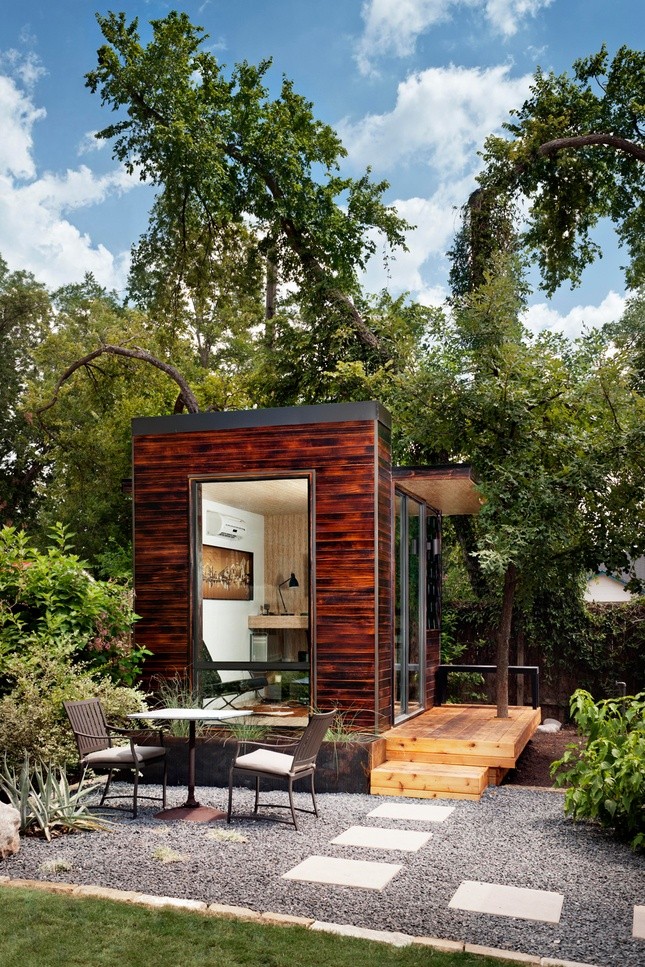
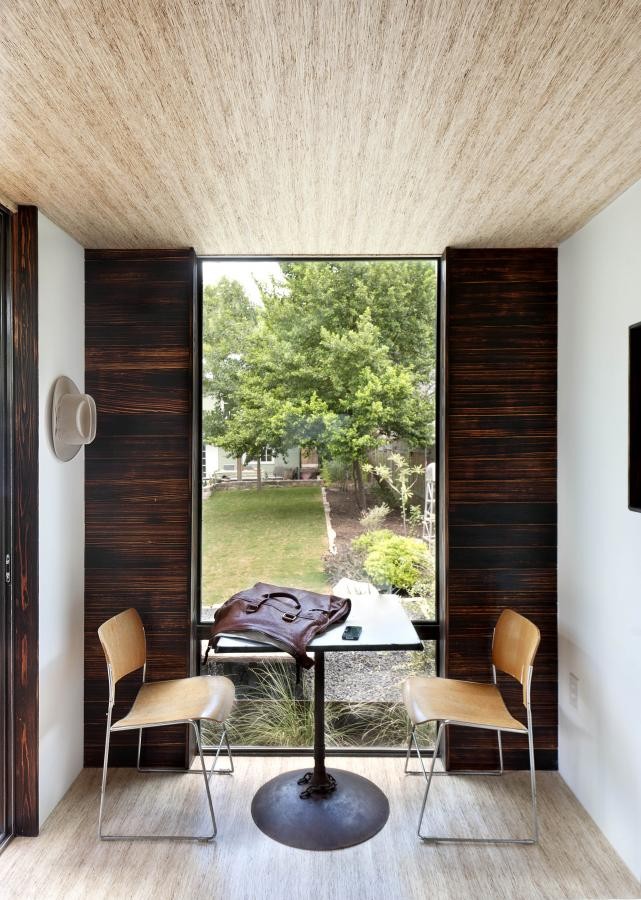
Sett-Designed-Studio-shou-sugi-ban-Office-via-Remodelista sett_studio-window-shou-sugi-ban-studio-interior-Remodelista

For a quick tutorial on how to make your own shou sugi ban siding check out this video tutorial.

I’m excited to try this since I already have my propane torch from another wood experiment I did a few years back. I’ll have to jounal about that one another time.

Let me know if you give it a go and how your burnt offering turned out.

Holland

Images courtesy of resawntimberco.com, http://www.assets.nydailynews.com, http://www.youtube.com/watch?v=woOHbbaj6fM, http://www.oliverfluck.com, http://www.parlez-vousphotography.quietplacetolive.com, http://www.resawntimberco.com/shou-sugi-ban.html, http://www.deltamillworks.com, http://www.gardenista.com

If you would like your home to be warm, inviting, stylish, and reflect your personal style contact us here to discuss our design services.
Messy Christmas

01 Friday Dec 2023

Posted by Holland Stephens in Interiors

≈ 1 Comment

Tags

Christmas traditions, decorating for the holidays, Designed Christmas tree, designer Christmas tree, personalized holiday, Rockefeller Center Christmas tree, Xmas decor

I come from a family that believes in the sanctity of the Christmas Tree. It was and still is of extreme importance to pick the best tree you could find. Now mind you our idea of the best tree is not exactly everyones idea of the best tree. My husband and I go round and round about it every year since my family raised me to believe that the best tree meant that you could barely fit it in your car or even on top of your car. If it scraped the ceiling than it was barely close to big enough. He on the other hand, begs me to just once get a tree that we can actually fit through the door without doing damage. He’s a funny guy.

a_560x375

Maybe not this big but I have to say New Yorkers know how to do a Christmas tree right.

Rockefeller-Center-Christmas-Tre-top10

Being an interior designer I notice all of the gorgeous trees I see in magazines and in street windows and take note of how well they are done in regard to balance, proportion, scale, color, lighting, thematic content etc.

And there are some really amazing, and very designer-y trees out there.

Screen Shot 2014-12-15 at 11.06.47 PM

Screen Shot 2014-12-15 at 11.56.40 PM

However my tree……… while its BIG, it is what could be described as a mess. It has every kind of ornament you can imagine on it. It is not terribly designer-y. Even as much as I would like it to be sometimes. The struggle is real as I go to open the stored ornament boxes and lights. Now there are some really beautiful ornaments and lights in these boxes. I bet if I put my mind to it, I could find a theme in it all. But there is a lot more to this story.  You see I have been collecting an ornament a year since I was in my twenties and got my very first tree in my college apartment. I also have a few ornaments from when I was young. My husband also has a few from his childhood.

When my kids were born we started a tradition of going to the store and they would each pick out one special ornament for that years Christmas tree. They would carefully put their initials and current year on the bottom of their special ornament with the thought that one day, when they have their own apartment, I will ship them their box of childhood ornaments.

So on the night we get our HUGE tree, it has become a tradition to go through the ornament boxes as a family and find our special ornaments and place them on the tree. My kids are now 25 and 26 and with all that John and I have collected, we need a really BIG tree to fit it all on. There is method to my madness. It’s a special night and every ornament comes with a memory of a Christmas past. It usually takes us a few hours to get them all placed. When finished we watch our annual viewing of “ELF”, because like me Buddy, the main character, had a fine appreciation of a good Christmas tree.

MV5BNjY1NjQ3NDY5MF5BMl5BanBnXkFtZTYwODAyMTc3._V1_SX640_SY720_

And here is the final result.

get-attachment-5.aspx


get-attachment-4.aspx

Yes, its not going to be photographed anytime soon for any design magazine but that’s ok. We love our mess of a Christmas tree and I wouldn’t have it any other way.

Messy Christmas to you all and hope you have a lovely holiday.

Holland


Images courtesy findinglovely.com, New York Magazine.com, infoniac.com, izeko.hubpages.com, imdb.com


If you would like your home to be warm, inviting, stylish, and reflect your personal style contact us here to discuss our design services.
 

Go back

Your message has been sent

Warning
Warning
Warning
Warning

Warning.

Newer posts →

Enter your email address to follow this blog and receive notifications of new posts by email.

Search

Categories

  • Architecture
  • Art
  • Interior business
  • Interiors
  • Landscapes
  • Products
  • Uncategorized

Content Etiquette

I do not claim ownership of any of the imagery on this blog, unless otherwise noted. I make every attempt to give credit whenever possible. There are occasions when I do not have information, and will gladly add credit or remove the image if contacted by the owner. Thank you.
  • April 2025
  • January 2025
  • December 2024
  • November 2024
  • October 2024
  • September 2024
  • August 2024
  • July 2024
  • June 2024
  • May 2024
  • April 2024
  • March 2024
  • February 2024
  • January 2024
  • December 2023
  • Land and Sky
  • Indigo
  • Architecture on Ice
  • The Cost Of Perfection
  • Homes of creatives

Search

Recent Posts

  • Land and Sky April 1, 2025
  • Indigo January 1, 2025
  • Architecture on Ice December 1, 2024
  • The Cost Of Perfection November 1, 2024
  • Homes of creatives October 1, 2024

Enter your email address to follow this blog and receive notifications of new posts by email.

Join 282 other subscribers

Create a website or blog at WordPress.com

  • Subscribe Subscribed
    • Holland Stephens Interiors
    • Join 46 other subscribers
    • Already have a WordPress.com account? Log in now.
    • Holland Stephens Interiors
    • Subscribe Subscribed
    • Sign up
    • Log in
    • Report this content
    • View site in Reader
    • Manage subscriptions
    • Collapse this bar
 

Loading Comments...